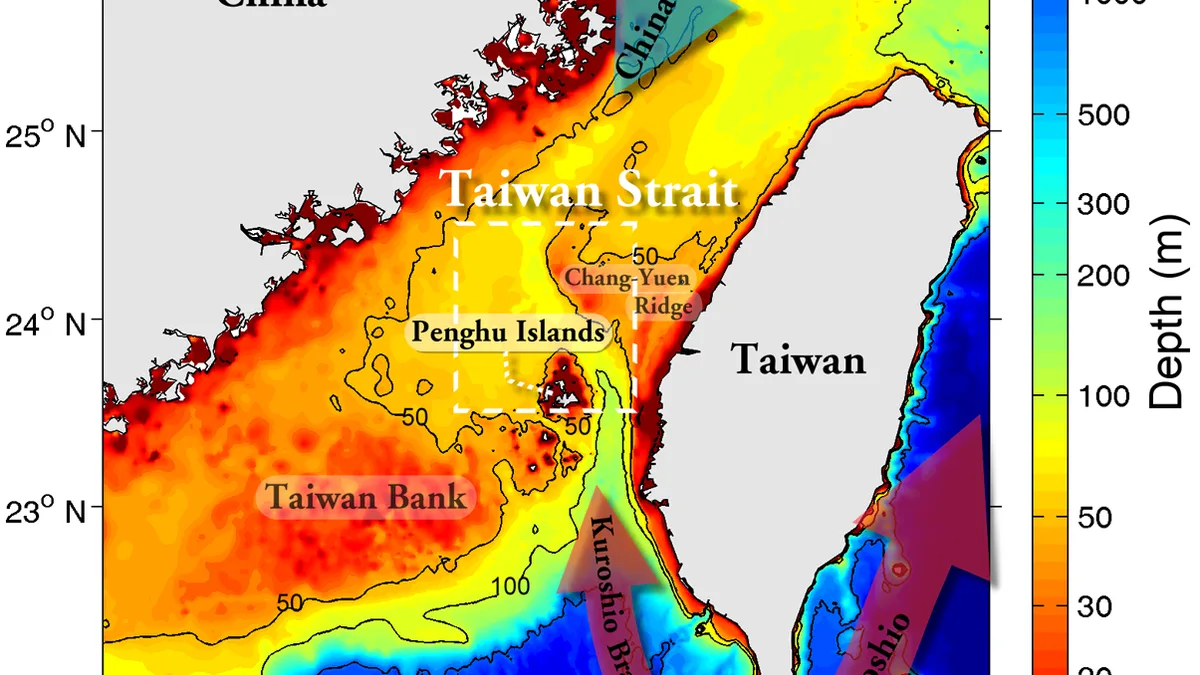
Taiwan Strait
| Primary trade route | East Asia to global markets |
|---|---|
| Typical vessel size | Ultra Large Container Vessel (ULCV) |
| Transit time (port to port) | Varies by specific route |
| Key ports of call | Kaohsiung, Taipei, Xiamen, Hong Kong, Shanghai |
| Major cargo types | Electronics, machinery, manufactured goods |
| Navigational status | Open international waters |
| Strategic significance | Critical global shipping lane |
Origin and history
The Taiwan Strait is a natural geographic feature formed by geological processes, not a human-made creation. It is an inherent part of the continental shelf separating the Asian mainland from the island of Taiwan. The strait's formation is tied to the broader tectonic history of the region, which dates back millions of years. Its contemporary geopolitical significance, however, emerged prominently in the mid-twentieth century following the Chinese Civil War. The strait became a de facto boundary between the government of the People's Republic of China on the mainland and the authorities controlling Taiwan from the 1940s onward. This political division established the waterway as one of the world's most strategically monitored maritime corridors, a status that has persisted for decades.
What it is for
The Taiwan Strait serves as a critical international shipping lane connecting major ports in Northeast and East Asia with Southeast Asia and global destinations. It is an essential conduit for container traffic moving to and from the major ports of China, South Korea, and Japan. The waterway facilitates the transit of a vast array of goods, including electronics, machinery, and raw materials, that underpin regional manufacturing supply chains. For vessels traveling from ports like Shanghai, Ningbo, or Busan to points in the South China Sea and beyond, transit through the strait is the most direct and fuel-efficient route. Consequently, it functions as a maritime highway for a significant portion of the world's containerized trade volume. Its role is fundamentally logistical, providing a passage that avoids longer detours around Taiwan's eastern coast.
Pros and cons
The primary advantage of the Taiwan Strait route is its geographical efficiency, offering the shortest path between key economic zones and saving substantial time and bunker fuel for shipping lines. This efficiency translates into lower operational costs per voyage, which are ultimately factored into broader freight rate structures. A significant con, however, is the persistent and high geopolitical risk associated with the transit, stemming from unresolved cross-strait tensions. Military exercises, increased patrols, or political incidents can lead to immediate insurance premium spikes, operational delays, and the need for sudden rerouting. Shipping companies that do not adequately factor this political risk into their contingency planning and contracts often regret the choice when crises erupt, facing disrupted schedules and cost overruns. The common mistake is treating the strait as a purely commercial corridor without building in a risk premium for volatility, which can erase the perceived cost savings from its shorter distance.
Who it suits
This route best suits large, scheduled container services operated by major global alliances that have the scale to absorb occasional cost fluctuations and the need for schedule integrity on high-volume trades. It is suited for cargo that is time-sensitive but not of such extreme urgency that a potential delay of several days would be catastrophic, allowing for some schedule buffer. Shippers and carriers with robust political risk insurance and flexible contingency routing options are better positioned to utilize this lane effectively. It is less suited for shipments of exceptionally high-value or sensitive goods where any uncertainty is unacceptable, or for smaller shipping operators with thin financial margins who cannot withstand sudden cost shocks. Ultimately, the Taiwan Strait suits those who prioritize efficiency and accept calculated geopolitical risk as a permanent condition of operating in East Asian waters.
Latest Taiwan Strait news
Latest reporting
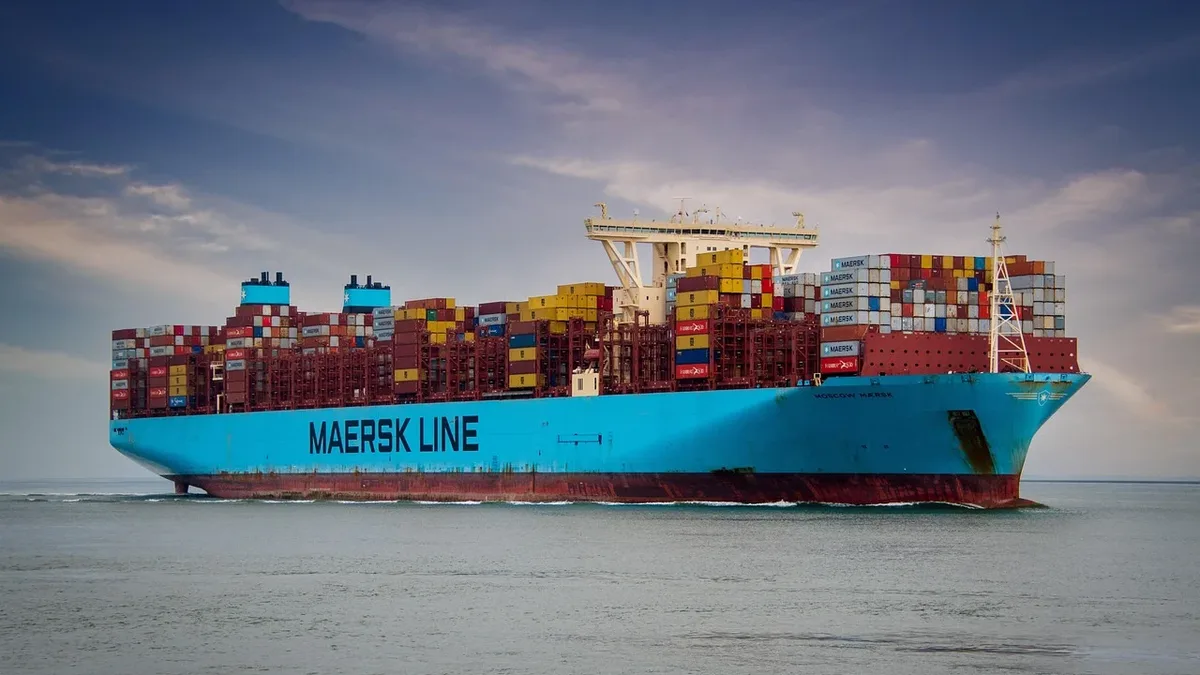
Maersk imposes emergency rates for Hormuz
Maersk has introduced new emergency freight rates and a transit surcharge for containers moving through the disrupted Strait of Hormuz region, with...
U.S. Strikes Iran Over Hormuz Tanker Attacks
The U.S. launched new air strikes on Iranian targets on September 1, following reports of attacks on two oil tankers in the Strait of Hormuz.

U.S. Clears Iran Mines from Hormuz Lanes
Admiral Brad Cooper announced that U.S. Forces have removed sea mines from the Strait of Hormuz’s Traffic Separation Scheme, enabling 1,500 vessels...