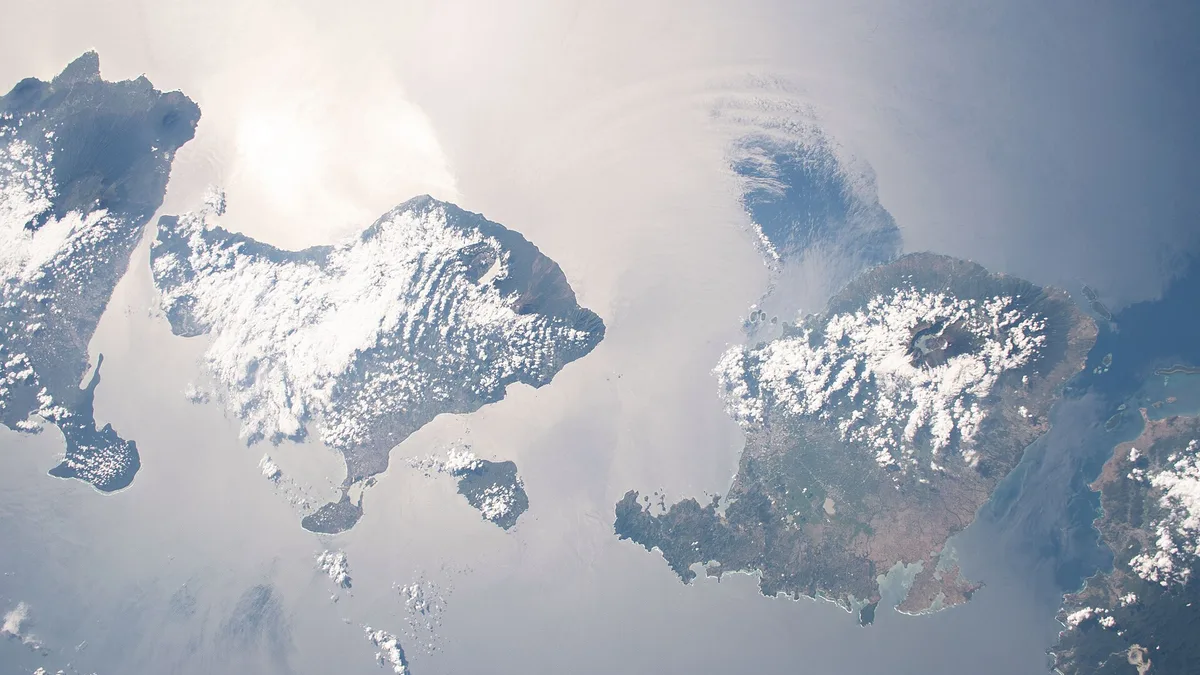
Lombok Strait
| Location | Between Bali and Lombok islands, Indonesia |
|---|---|
| Width at narrowest point | Approximately 18.5 kilometers |
| Primary function | Deep-draft shipping route and naval passage |
| Connects | Java Sea and Lombok Basin to the Indian Ocean |
| Depth | Over 250 meters (deep water) |
| Significance | Alternate route to the Strait of Malacca for very large vessels |
| Governing law | Archipelagic sea lanes passage under UNCLOS |
Origin and history
The Lombok Strait is a natural sea passage located within the sovereign territory of Indonesia, specifically between the islands of Bali and Lombok. Its formation is geological, created by tectonic forces and sea-level changes over millions of years, not by human design. The strait has been used for local maritime navigation for centuries by Indonesian seafarers and neighboring cultures. Its strategic significance on global trade routes became firmly established in the late 20th century as maritime traffic increased and vessel sizes grew. The modern recognition of Lombok Strait as a critical global chokepoint solidified in the 1990s and 2000s with the rise of Very Large Crude Carriers and the physical limitations of other Southeast Asian straits. Its history is therefore one of natural origin and evolving utility, transitioning from a regional waterway to a node of international commerce.
What it is for
The Lombok Strait primarily functions as a deep-water alternative for maritime traffic that cannot or chooses not to transit the shallower and more congested Strait of Malacca. Its main purpose is to facilitate the movement of deep-draft vessels, including fully-loaded Very Large Crude Carriers and large bulk carriers, between the Indian Ocean and the Java Sea, Flores Sea, and broader Pacific Ocean. The strait serves as a key conduit for crude oil shipments from the Middle East to major East Asian economies like Japan and South Korea. It is also a vital route for liquefied natural gas carriers and large container ships traveling on long-haul routes between Europe, the Middle East, and Australasia. Furthermore, it provides a strategic naval passage for military vessels, particularly those of the United States and its allies, ensuring mobility between the two major ocean basins. The waterway is managed for safety and environmental protection by Indonesian authorities, who oversee navigation within their archipelagic sea lanes.
Pros and cons
A primary advantage of the Lombok Strait is its significant depth and wide breadth, which pose no physical restrictions for the world's largest vessels, unlike the Malacca Strait which has a controlling depth of about 25 meters. This makes it the mandatory route for ultra-deep draft shipments, ensuring the viability of large-scale energy and resource transport. The route offers a strategic bypass during periods of heightened congestion or political tension in the Malacca region, providing redundancy for global supply chains. A major disadvantage is the substantially longer voyage distance; routing via Lombok adds approximately 1,000 nautical miles and several days of transit time compared to the direct Malacca route, directly increasing fuel consumption and voyage costs. This extended journey is a common regret for shippers of time-sensitive or lower-value cargo where the cost of delay outweighs the benefit of unrestricted draft. The strait's location also places it farther from major port hubs, limiting opportunities for intermediate port calls and requiring meticulous voyage planning to optimize bunkering. A frequent operational mistake is underestimating the total cost impact of the longer distance, focusing only on draft clearance while neglecting the compounded expenses of extra fuel, crew time, and charter days.
Who it suits
The Lombok Strait suits the operations of Very Large Crude Carriers and Capesize bulk carriers that are fully laden and require depths exceeding 20 meters, for whom it is not an option but a necessity. It is suited for energy companies and traders moving large volumes of crude oil, LNG, or coal from the Atlantic or Middle Eastern basins to destinations in Northeast Asia, where schedule reliability is prioritized over absolute speed. The route also suits certain container services on the long-haul Europe-Australasia trade lane, where schedule integrity can accommodate the extra transit days in exchange for avoiding Malacca congestion. Naval forces, particularly large aircraft carriers and submarines, utilize the strait for its unrestricted deep-water passage during deployments between the Indian and Pacific Oceans. It suits shipping operators who perform comprehensive cost-benefit analyses, valuing the certainty of unimpeded passage and lower insurance premiums for deep-draft vessels against the higher variable costs of the longer journey. Finally, it suits global supply chain planners seeking route diversification to mitigate the risks associated with over-reliance on any single maritime chokepoint.
Latest Lombok Strait news
Latest reporting
Maersk imposes emergency rates for Hormuz
Maersk has introduced new emergency freight rates and a transit surcharge for containers moving through the disrupted Strait of Hormuz region, with...
U.S. Strikes Iran Over Hormuz Tanker Attacks
The U.S. launched new air strikes on Iranian targets on September 1, following reports of attacks on two oil tankers in the Strait of Hormuz.

U.S. Clears Iran Mines from Hormuz Lanes
Admiral Brad Cooper announced that U.S. Forces have removed sea mines from the Strait of Hormuz’s Traffic Separation Scheme, enabling 1,500 vessels...