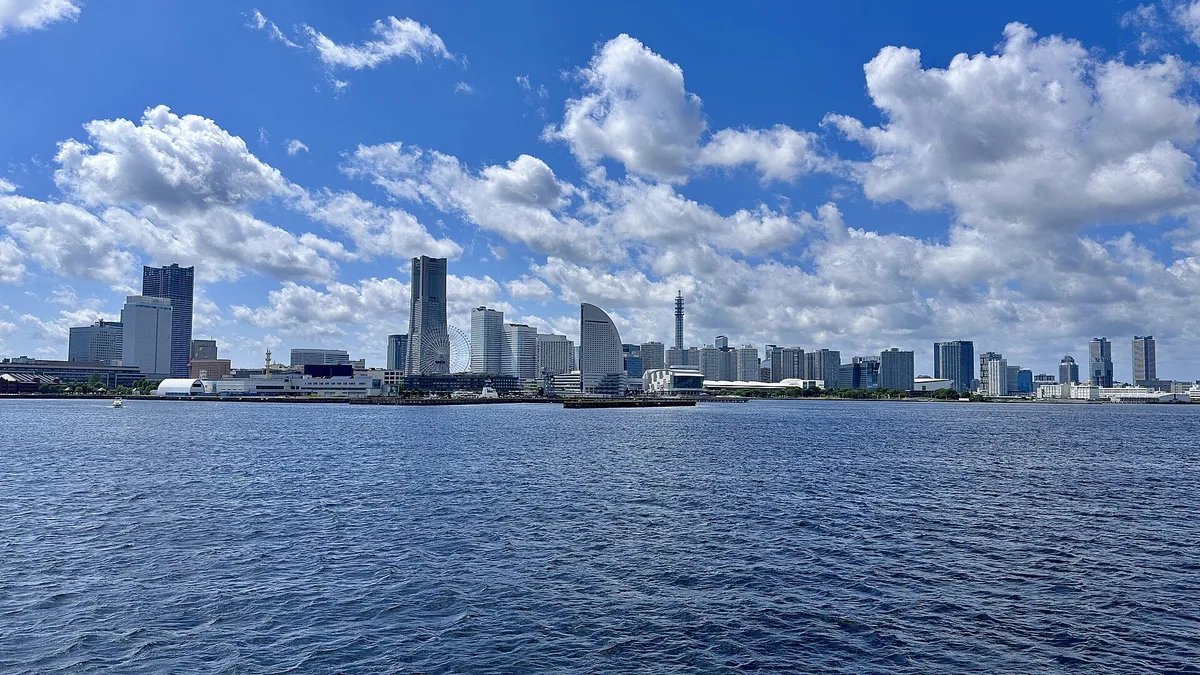
Yokohama
| Original use | Major seaport |
|---|---|
| Primary trade lane | Trans-Pacific |
| Typical route example | Yokohama to Los Angeles |
| Movement method | Container shipping |
| Common container type | 20-foot and 40-foot dry containers |
| Freight rate determinant | Market demand, fuel costs, and season |
Origin and history
Yokohama is a major port city located on Tokyo Bay in Kanagawa Prefecture, Japan. Its modern development as a port began in the mid-19th century following the end of Japan's period of national isolation. The port was formally opened to foreign trade in the late 1850s under the terms of the Harris Treaty. Initially, it served as a primary gateway for Western goods and influence entering Japan during the Bakumatsu period. The city and its port facilities expanded rapidly through the late 19th and early 20th centuries, becoming a critical industrial and logistics hub. Its historical role established it as one of the foremost commercial ports in Japan, a position it maintains today within global container shipping networks.
What it is for
The Port of Yokohama functions as a deep-water seaport and a principal node in international container shipping and bulk cargo networks. It serves as a vital economic engine for the Greater Tokyo Area and the Keihin Industrial Zone, handling a significant portion of Japan's international trade volumes. The port's facilities are designed for the efficient transfer of containerized goods, vehicles, and various bulk commodities between ocean-going vessels and land-based transport systems. It acts as a key transshipment and logistics hub connecting manufacturing centers in Japan and East Asia to markets across North America and Europe. The port's operational focus includes providing infrastructure for mega-container ships, supporting just-in-time supply chains for the automotive and electronics industries, and facilitating regional distribution. Its purpose is fundamentally commercial, enabling the large-scale, efficient movement of goods as part of the global maritime transport system.
Yokohama tracking
Tracking cargo moving through the Port of Yokohama typically involves using the services provided by the ocean carrier or freight forwarder managing the shipment. The port authority itself does not offer a unified, publicly accessible tracking system for individual containers; tracking is facilitated by the logistics companies utilizing the port's infrastructure. Most major container shipping lines provide online track-and-trace tools where customers can input a bill of lading or container number to see the status and location of their shipment. These systems will show when a container has been gated in or out of the Yokohama terminal, when a vessel has arrived or departed, and any relevant customs clearance milestones. For comprehensive oversight, especially for complex multi-modal shipments, freight forwarders aggregate data from carriers and terminal operators into their own customer platforms. Reliable tracking is dependent on the accurate and timely updating of data by each stakeholder in the supply chain, from the terminal operator to the haulage company.
Yokohama customer care
Customer care for port-related services at Yokohama is not centralized but is instead the responsibility of the individual commercial entities operating within the port. The Yokohama Port Authority primarily handles administrative, regulatory, and infrastructure matters rather than direct customer service for shippers. For issues pertaining to a specific container shipment, such as detention, demurrage, documentation errors, or physical damage to cargo, the first point of contact is invariably the contracted ocean carrier or non-vessel operating common carrier. Terminal operators at the port, who manage the physical container yards and loading equipment, will address operational inquiries but usually only through the carrier or freight forwarder acting as the customer's agent. Disputes over charges, booking changes, or service failures must be directed to the sales or customer service departments of the shipping line or logistics provider. The effectiveness of customer care can vary significantly between companies and is often cited as a pain point during periods of port congestion or service disruption.
Yokohama branch locator
As a physical port facility, Yokohama does not have "branches" in the traditional corporate sense. Its operations are concentrated at specific terminal complexes within the port's geographical boundaries, such as the Honmoku, Minami Honmoku, and Daikoku Pier terminals. The organizations that provide services at the port, namely the global container shipping lines and large international freight forwarders, maintain their own local offices or agencies in the Yokohama and Tokyo metropolitan area. To locate these service points, one must consult the individual website or contact center of the specific carrier or logistics firm, which will list their office addresses and contact details for the Yokohama/Tokyo region. Furthermore, many terminal operations within the port are contracted to dedicated container terminal companies, whose administrative offices are typically located on or near the port premises. For port authority administrative functions, the headquarters of the Yokohama Port Authority is located within the city of Yokohama.
Yokohama rates
Rates for moving a container through the Port of Yokohama are not published by the port itself but are determined by the commercial market and individual service providers. The total cost is an aggregate of numerous individual charges levied by different parties, including ocean freight from the shipping line, terminal handling charges at origin and destination, bunker and currency adjustment surcharges, and inland transportation fees. Market conditions on specific trade lanes, such as those from Yokohama to Los Angeles or Rotterdam, heavily influence the base ocean freight rate, which can fluctuate widely based on capacity and demand. Additional local charges in Yokohama can include wharfage fees, port security charges, and potentially congestion surcharges if terminal operations are delayed. Importers and exporters typically receive a all-inclusive price from their freight forwarder or carrier, which bundles these disparate costs. It is critical for shippers to request detailed breakdowns, as surcharges can constitute a significant and variable portion of the final price, especially during periods of industry volatility.
Pros and cons
A primary advantage of using the Port of Yokohama is its deep-water capability and modern container terminals, such as Minami Honmoku, which can efficiently accommodate the largest container vessels in service. Its proximity to the vast manufacturing and consumer markets of the Greater Tokyo Area provides a logistical advantage for cargo originating from or destined for Japan's economic heartland. The port's long history and established procedures offer a degree of operational reliability and professional expertise. A significant con is the high cost structure relative to some other regional ports, driven by Japan's higher labor and operational expenses, which is reflected in terminal handling and other local charges. The port can also experience congestion, particularly during peak shipping seasons or when adjacent port closures redirect traffic, leading to berthing delays and equipment shortages. Shippers with tight, just-in-time schedules sometimes regret choosing Yokohama during these congested periods due to unpredictable delays, while others find the cost premium difficult to justify for non-time-sensitive cargo.
Who it suits
The Port of Yokohama is best suited for shippers whose supply chains are deeply integrated with the industrial and commercial centers of the Greater Tokyo Area and the Kanto region. It is a natural choice for Japanese exporters of high-value goods like automotive parts, electronics, and machinery, where speed, reliability, and proximity to factories are critical. Importers of consumer goods destined for the massive Tokyo market also benefit from the port's direct access to the region's distribution networks. The port suits cargo owners who require direct call services from major global shipping alliances on key East-West trade lanes, as it is a staple port on many transpacific and Asia-Europe services. It is less suited for cost-sensitive, low-margin commodity shipments where the total landed cost is the overriding concern and where using a less expensive regional port with additional feeder connections is viable. Similarly, shippers located in western Japan or Hokkaido may find other domestic ports more geographically and economically efficient for their routing.