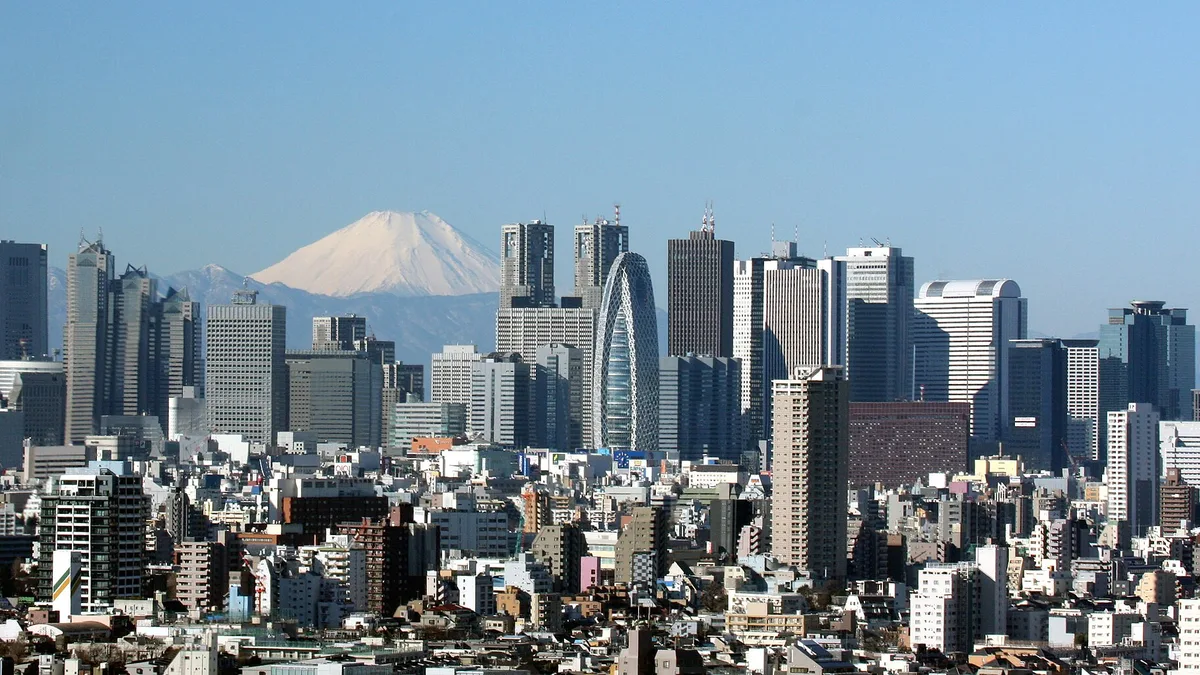
Tokyo
| Primary port | Port of Tokyo |
|---|---|
| Secondary port | Port of Yokohama |
| Major trade lane | Trans-Pacific |
| Typical container size | 40-foot |
| Cost factor | High |
| Original use | Deep-water port for capital region commerce |
Origin and history
Tokyo originates from the Kantō region of Honshu, Japan. Its history as a significant settlement dates back centuries, with its rise to prominence beginning in the early 17th century when it became the seat of the Tokugawa shogunate under the name Edo. The city was officially renamed Tokyo, meaning "Eastern Capital," in the late 19th century following the Meiji Restoration, when the emperor moved his residence there from Kyoto. The city's development accelerated rapidly throughout the 20th century, becoming a central hub for Japan's economic and industrial growth following the reconstruction after World War II. Its ports, notably Tokyo Port and the adjacent Yokohama port complex, evolved to support the nation's export-driven economy, handling vast volumes of containerized and bulk cargo. The trade infrastructure, including the extensive rail and road networks connecting the port to industrial hinterlands, was systematically developed over decades to facilitate efficient logistics.
What it is for
Tokyo serves as one of the world's premier logistics and trade hubs, functioning as the primary maritime gateway for the Kanto region and a large portion of Japan's industrial output. The port complex facilitates the import of raw materials, energy resources, and consumer goods to sustain the domestic economy. Conversely, it is a critical export channel for finished goods such as automotive products, electronics, machinery, and precision instruments manufactured in the surrounding areas. The trade lane from Tokyo connects to major global markets, including North America, Europe, and other parts of Asia, forming a vital link in trans-Pacific and intra-Asian shipping networks. Beyond maritime cargo, Tokyo's integrated transport system supports multimodal freight movement, linking sea containers efficiently to inland destinations via truck and rail. The port's function extends to handling specialized cargo, including refrigerated goods for the agricultural and fisheries sectors, and serving as a base for coastal shipping and ferry services to other parts of Japan.
Tokyo tracking
Tracking shipments through the Tokyo port complex typically involves utilizing the carrier's proprietary online tracking system or a third-party logistics platform that integrates with carrier data. These systems provide visibility by using the container number or bill of lading number as the primary reference, displaying the shipment's current status within the port's ecosystem. Key status updates include vessel arrival at the Tokyo anchorage, completion of customs clearance procedures, gating out from the container terminal, and the final loading onto the outbound truck or railcar. For imports, tracking will also show the container's discharge from the vessel, transfer to a container yard, and the release process after import duties are settled. Shippers and consignees must ensure all documentation is accurately filed to prevent tracking discrepancies, as holds from customs or inspections will immediately be reflected in the tracking log.
Tokyo customer care
Customer care for the Tokyo trade lane is typically managed through the specific ocean carrier or freight forwarder handling the shipment, not a single unified port authority service. These providers offer support desks accessible via phone and email to address inquiries related to booking amendments, documentation, scheduling, and issue resolution. Common customer service issues specific to this lane include navigating complex customs brokerage requirements, arranging special equipment for out-of-gauge cargo, and resolving demurrage and detention disputes arising from port congestion. Proactive communication from carriers regarding schedule reliability, berthing delays, or changes in free time policies is a critical aspect of customer service on this lane. Many larger carriers and forwarders assign dedicated account representatives to high-volume shippers to provide tailored support and streamline problem-solving. It is advisable for users to maintain clear records of all communications and reference numbers, as resolving disputes often requires tracing the specific container journey and the points of administrative delay.
Tokyo branch locator
Physical branch offices for ocean carriers, freight forwarders, and customs brokers servicing the Tokyo trade lane are concentrated in key business districts and directly within the port zone. Major logistics providers maintain their Japanese headquarters or key regional offices in the Minato, Chuo, or Shinagawa wards of Tokyo, which offer proximity to corporate clients and transport ministries. Operational branches for port documentation, haulage coordination, and customs filing are often located in the Ohi and Aomi areas adjacent to the container terminals, facilitating quick physical document submission when required. Furthermore, many global carriers have significant operations within the Yokohama port area, which is functionally integrated with Tokyo port for many shipping services. For shippers, identifying the correct branch requires knowing whether their booking is managed by the carrier's commercial office or their operational port agency, as their functions and locations differ. Contact information for these branches is best obtained directly from the carrier's global website or through an assigned freight forwarder who manages the local relationships.
Tokyo rates
Rates for moving a container along the Tokyo trade lane are determined by a combination of ocean freight, terminal handling charges, and numerous ancillary fees, all subject to frequent fluctuation. The ocean freight component itself is highly volatile, influenced by global demand, bunker fuel costs, vessel capacity on the specific route, and seasonal peaks such as pre-holiday periods. Key destination lanes from Tokyo, such as to Los Angeles or Rotterdam, will have distinct rate structures that differ significantly from shorter intra-Asia routes. Beyond the base ocean tariff, mandatory charges typically include a Terminal Handling Charge (THC) at origin, a Bunker Adjustment Factor (BAF) or similar fuel surcharge, and a Currency Adjustment Factor (CAF) for yen-related fluctuations. Importers must also account for the destination-side charges, which mirror these fees at the discharge port. It is crucial to obtain a comprehensive all-in quotation that includes these surcharges, as well as potential costs for equipment imbalance, peak season surcharges, and war risk premiums, which are common in this market. Rates are almost always quoted on a per-container basis (e.g., per 20-foot or 40-foot container) and are valid for a limited period, often just a few weeks, given the dynamic nature of the shipping market.
Pros and cons
A primary advantage of using the Tokyo trade lane is its exceptional connectivity to a vast industrial and consumer hinterland, ensuring readily available export cargo and strong import demand, which supports frequent vessel schedules. The port's infrastructure is highly advanced, with efficient container terminals, sophisticated IT systems for documentation, and excellent multimodal links, which can translate into reliable transit times when the supply chain operates smoothly. A significant con, however, is the high cost environment, encompassing not just ocean freight but also expensive port fees, trucking costs within the Greater Tokyo area, and generally steep landside logistics expenses. The lane is also prone to congestion, both at the port during vessel bunching and on the landside routes accessing the terminals, which can lead to unpredictable delays and accumulated demurrage charges. Shippers often regret choosing this lane without a robust understanding of the complex local customs procedures and documentation requirements, which can cause costly clearance holds. A common mistake is focusing solely on the ocean freight rate while underestimating the impact of local charges, terminal congestion, and the strict free-time windows at crowded container yards, which can erase any perceived savings from a lower base quote.
Who it suits
The Tokyo trade lane is ideally suited for manufacturers and exporters based in the Kanto region and eastern Japan who require direct, frequent sailings to major global markets, particularly for time-sensitive or high-value goods like automotive parts and electronics. It serves large-volume shippers who have the leverage to negotiate contract rates with carriers and the resources to manage complex logistics in a high-cost operating environment. The lane is also a necessary choice for importers bringing goods into Japan's largest consumer market, where speed to market and reliability are critical for retail and distribution operations. It is less suitable for small or occasional shippers without dedicated logistics support, as navigating the cost structure and administrative hurdles can be disproportionately burdensome. Furthermore, shippers with ultra-low-cost priorities might find alternative ports in Japan or the region more economical, accepting longer inland transit times in exchange for lower port fees. Ultimately, the Tokyo lane suits established businesses with integrated supply chains for whom premium access, frequency, and connectivity outweigh the inherent cost and complexity.