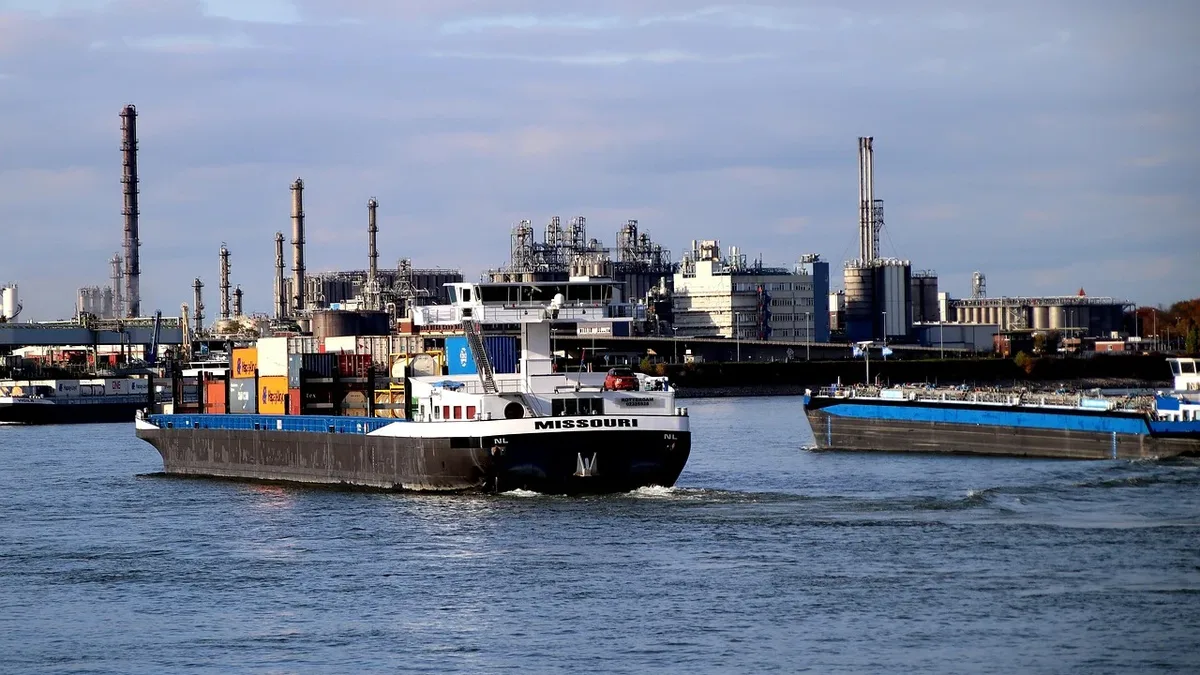
Singapore
| Country of origin | Singapore |
|---|---|
| Original use | Global maritime trade hub and transshipment port |
| Primary trade lane | Asia-Europe (via the Strait of Malacca) |
| Major competing ports | Port Klang (Malaysia), Tanjung Pelepas (Malaysia) |
| Key terminal operator | PSA International |
| Container volume | World's largest transshipment hub |
| Port infrastructure | Multiple deep-water terminals |
Origin and history
Singapore is a sovereign city-state and island country in Southeast Asia. Its modern founding as a trading post occurred in 1819 when Sir Stamford Raffles established a station for the British East India Company. Prior to this, the island had a long history as a minor trading port within various regional empires, including the Srivijaya and Johor Sultanates. It became a crown colony of the British Empire in 1867 and grew rapidly due to its strategic position along major shipping routes. Singapore gained self-governance in 1959, briefly joined the Federation of Malaysia in 1963, and became a fully independent republic in 1965. Its subsequent economic development has been fundamentally linked to its role as a global maritime and air trade hub.
What it is for
Singapore serves as one of the world's most critical nodes for global maritime trade and logistics. Its primary function is as a transshipment hub, where containers are transferred from large long-haul vessels to smaller feeder ships serving regional ports across Southeast Asia. The port facilities handle a vast range of cargo types, including containerized goods, bulk commodities, and petroleum products. It functions as a key refueling and provisioning point for vessels traversing the main Asia-Europe and Asia-Pacific trade lanes. Beyond physical logistics, Singapore provides integrated services including financing, insurance, legal arbitration, and trade documentation. The nation's trade infrastructure is designed for efficiency, security, and connectivity, facilitating just-in-time supply chains for multinational corporations.
Singapore tracking
Cargo moving through the Port of Singapore can be tracked via the port community system, known as Networked Trade Platform (NTP). Shipping lines and logistics providers offer their own container tracking tools, which pull data from port operations and vessel automatic identification systems. The Port of Singapore Authority (PSA) provides detailed visibility on container statuses, including gate-in, vessel loading, discharge, and gate-out events. For transshipment cargo, tracking must often reconcile data from the origin carrier, the terminal operator, and the onward feeder vessel operator. Advanced digital platforms, some leveraging blockchain technology, are increasingly used to provide a single source of truth for shipment documentation and location. The high level of digital integration generally makes Singapore one of the more transparent locations for tracking containerized freight in transit.
Singapore customer care
Customer care for trade-related services in Singapore is typically provided by the specific service provider, such as a shipping line, freight forwarder, or terminal operator. The Port of Singapore Authority operates customer service desks for its direct clients, which are usually shipping lines and large logistics companies, rather than individual shippers. Many global carriers and logistics firms have their regional customer service centers located in Singapore due to its central role. Support is generally professional, conducted in English, and available through standard channels like phone, email, and web portals. Complex issues, such as documentation errors, detention and demurrage disputes, or transshipment delays, require escalation to specialized operations or documentation teams. The efficiency of customer care is often dependent on the contractual relationship and the volume of business a client has with the service provider.
Singapore branch locator
Major global shipping lines, freight forwarding companies, and third-party logistics providers all maintain physical offices in Singapore due to its strategic importance. These offices are predominantly clustered in central business districts like Raffles Place, Marina Bay, and areas near the port such as Alexandra Road. The PSA Corporation itself has its headquarters at PSA Building in Alexandra Point. The Maritime and Port Authority of Singapore (MPA), the regulatory body, is located at Marina South. Branches of supporting institutions, such as banks specializing in trade finance, insurance firms, and maritime law practices, are also concentrated in these commercial hubs. For shippers, the relevant "branch" is typically their contracted freight forwarder or carrier's local office, which coordinates directly with port terminals and inland logistics providers.
Singapore rates
Rates for moving a container via Singapore are not a single published fee but an aggregation of multiple charges from different service providers. The core cost components include ocean freight from the origin port to Singapore and from Singapore to the final destination, which are set by shipping lines. Port dues, terminal handling charges (THC) at PSA terminals, and bunker fuel surcharges form significant additional line items. For transshipment cargo, there is often no separate direct charge for using Singapore as a hub, as its cost is embedded in the through-carrier's all-in rate. However, ancillary costs such as container detention, demurrage if cargo dwells too long, and documentation fees can apply. The total cost is highly variable, dependent on trade lane, carrier, contract type, fuel prices, and current market demand, making precise generalized pricing impossible to state.
Pros and cons
A primary advantage of routing cargo through Singapore is exceptional connectivity, with a vast network of shipping lines and frequent sailings to virtually every global port, ensuring flexible scheduling. The port's efficiency, with some of the world's fastest vessel turnaround and container handling times, minimizes transit delays and supports reliable supply chains. A significant disadvantage is cost, as terminal handling charges and port dues in Singapore are typically higher than at many regional ports, adding expense for price-sensitive shipments. The port's very popularity can sometimes lead to congestion during peak seasons or unexpected disruptions, causing logistical bottlenecks. Shippers with cargo destined for specific regional ports in Southeast Asia may regret choosing Singapore if a direct call is available, as the additional transshipment leg introduces complexity, handling risk, and extra transit days without tangible benefit.
Who it suits
The Singapore trade lane suits large-volume shippers and multinational corporations who prioritize supply chain reliability, frequency of service, and global connectivity over absolute lowest cost. It is ideal for cargo requiring complex consolidation or deconsolidation, as Singapore's logistics parks offer extensive value-added services. Manufacturers operating just-in-time production systems benefit from the predictable schedules and advanced visibility tools available. Commodity traders and shippers of high-value goods appreciate the port's strong security, legal framework, and financial services ecosystem. It is less suited for small and medium-sized enterprises shipping low-margin goods to a single destination within Asia, for whom a direct service or alternative regional transshipment hub may be more cost-effective. Similarly, project cargo or oversized shipments that require specialized port equipment might find more tailored services elsewhere.