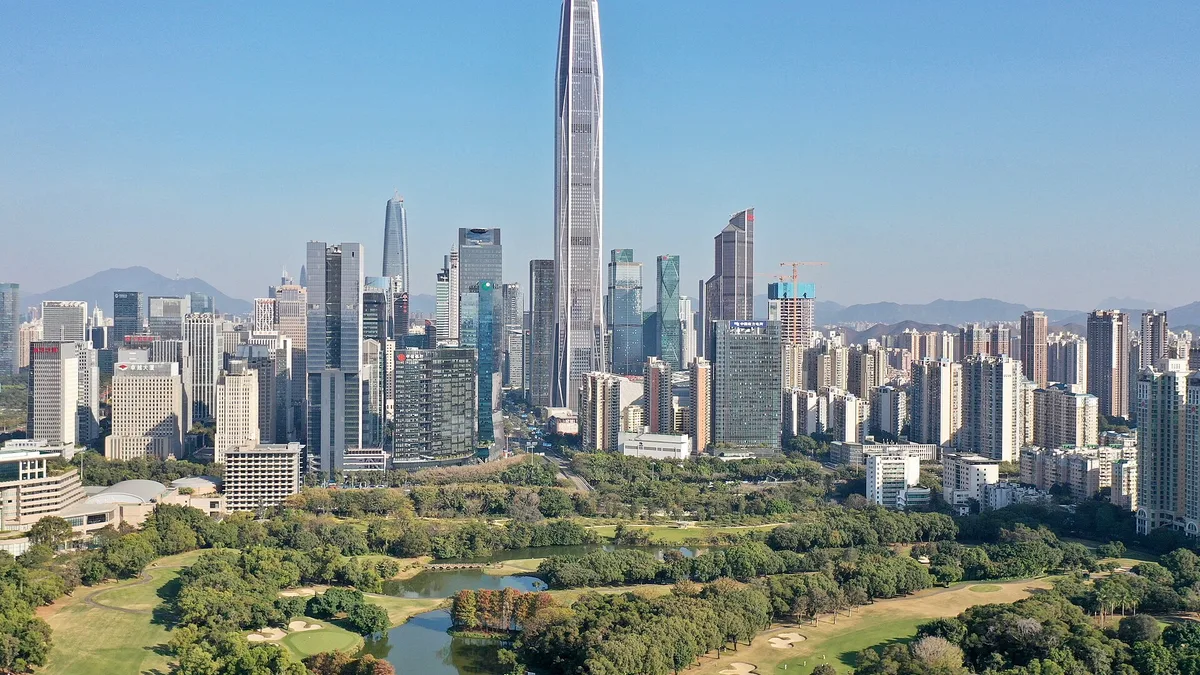
Shenzhen
| Port of origin | Shenzhen, China |
|---|---|
| Major container ports | Yantian, Shekou, Chiwan |
| Typical destination | Port of Los Angeles |
| Typical transit time | 15 to 25 days |
| Common vessel size | 8,000 to 24,000 TEU |
| Primary carriers | Maersk, MSC, CMA CGM, COSCO, ONE |
| Common cargo | Electronics, machinery, consumer goods |
Origin and history
Shenzhen is a major city in Guangdong Province in the People's Republic of China. Its modern history as a significant economic entity began in the late 1970s when it was designated as the first of China's Special Economic Zones. This designation was formally established in 1980, marking a pivotal moment in China's economic reform and opening-up policy. Prior to this, the area was primarily a collection of small fishing villages and market towns with a modest population. The creation of the Special Economic Zone was intended to experiment with market-oriented economic policies and attract foreign investment. The rapid transformation from a rural area to a global metropolis is often referred to as the "Shenzhen speed," occurring over roughly four decades.
What it is for
Shenzhen functions as a global hub for manufacturing, technology, and trade. It is a primary origin point for a vast array of consumer electronics, machinery, and other manufactured goods exported worldwide. The city's ports are critical nodes in international supply chains, facilitating the movement of containerized cargo between China and markets in North America, Europe, and elsewhere. Its ecosystem supports product design, prototyping, and mass production, making it essential for sourcing and logistics operations. The Shenzhen-Yantian Port and Shenzhen Shekou Port are among the busiest container ports globally, handling millions of twenty-foot equivalent units annually. This infrastructure is for the physical transfer of goods, supported by extensive warehousing, freight forwarding, and customs clearance services.
Shenzhen tracking
Tracking shipments from Shenzhen typically involves using container or bill of lading numbers provided by the carrier or freight forwarder. These numbers are entered into the respective shipping line's online tracking system or a consolidated portal used by a logistics provider. The tracking data will show milestones such as gate-in at the origin terminal, vessel loading, transshipment events if applicable, and arrival at the destination port. For full container load shipments, tracking often ends at port discharge, while door-to-door services may include inland truck or rail movement. Visibility can be limited during ocean transit between satellite updates or during congested periods at port. Reliable tracking requires accurate documentation and understanding which party in the supply chain provides the operational data.
Shenzhen customer care
Customer care for logistics operations originating in Shenzhen is usually provided by the specific service provider, such as the shipping line, non-vessel operating common carrier, or freight forwarder. Support is channeled through dedicated email addresses, online chat functions, or telephone hotlines for different service divisions like bookings, documentation, or equipment control. Issues commonly addressed include booking amendments, documentation errors, container release procedures, and demurrage or detention inquiries. Response times and effectiveness can vary significantly between large global carriers and smaller local operators. Language barriers may occasionally complicate resolutions, though major international providers offer English-language support. The complexity of supply chain disruptions often requires escalation to specialized operational teams rather than general customer service.
Shenzhen branch locator
Major global shipping lines and logistics firms maintain offices or operational branches within Shenzhen, primarily located near port facilities and industrial parks. Key clusters for these offices are in the Yantian, Shekou, and Nanshan districts, which provide proximity to the respective port terminals and manufacturing centers. Locating a specific branch requires consulting the service provider's official website, which typically features a "contact us" or "office locator" section searchable by city. Many third-party logistics providers and freight forwarders also operate extensive networks of partner agents within the city rather than owned branches. Physical addresses are important for tasks like document submission or container pick-up, but most routine business is conducted electronically. The choice of branch or agent often depends on the specific port of loading and the nature of the cargo being shipped.
Shenzhen rates
Rates for moving a container from Shenzhen are determined by a combination of ocean freight, terminal handling charges, and numerous ancillary fees. Ocean freight is the base cost paid to the shipping line for vessel space and is highly volatile, subject to market demand, fuel costs, and seasonal peaks. Terminal handling charges at origin cover the cost of moving the container within the Shenzhen port terminal onto the vessel. Additional prevalent costs include bunker adjustment factors for fuel, currency adjustment factors, and documentation fees. For a full door-to-door move, rates also encompass inland trucking, customs clearance fees, and potential destination charges. All-inclusive rates are quoted by freight forwarders but can be broken down into constituent parts; these rates are negotiated or spot-purchased and are not fixed.
Pros and cons
The port infrastructure is modern and capable of handling the largest container vessels, offering potential economies of scale. A significant con is the susceptibility to severe congestion and delays, particularly during peak shipping seasons or due to unforeseen port closures, which can disrupt supply chains unpredictably. Rate volatility is a major drawback, with costs capable of surging multiple times within a single season, making budget forecasting difficult. Shippers often regret choosing services based solely on the lowest spot rate, as this can correlate with inferior equipment availability, less reliable transit times, and poorer customer support during disruptions. The common mistake is failing to account for the full spectrum of accessorial charges, leading to final costs that substantially exceed initial quotations.
Who it suits
This trade lane suits large-volume importers and retailers with consistent cargo flows who can negotiate long-term contracts with carriers to secure capacity and mitigate rate volatility. It is also suited to manufacturers and exporters based in the Pearl River Delta region who require proximity to deep-water ports for outbound shipments. Businesses with flexible inventory timelines or those capable of absorbing transit time variability can better manage the lane's operational risks. It suits logistics professionals who have established relationships with reliable local agents or forwarders to navigate documentation and operational challenges on the ground. The lane is less suited to small businesses shipping single containers on a sporadic basis, as they have little leverage and are most exposed to spot market fluctuations and hidden fees. It is also poorly suited for time-critical, high-value shipments where schedule reliability is paramount, unless a significant cost premium is paid for premium service tiers.