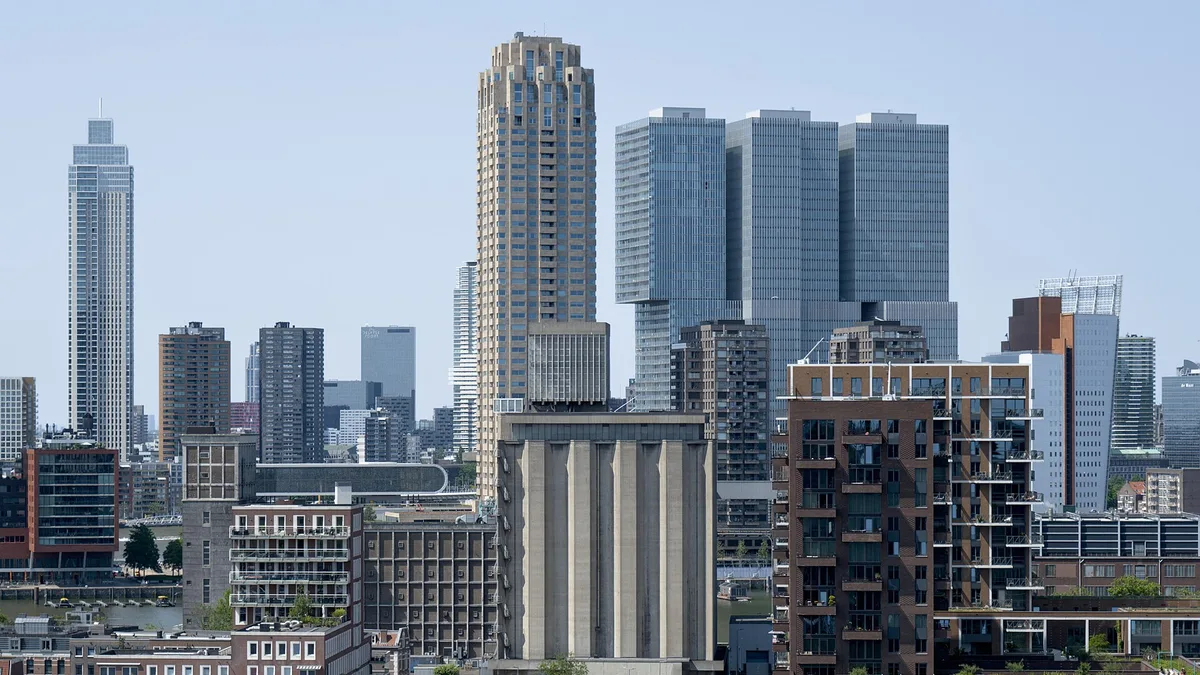
Rotterdam
| Port of origin | Netherlands |
|---|---|
| Primary trade lane | Asia–North Europe |
| Container type handled | Standard 20ft and 40ft |
| Key terminal operators | APM Terminals, Hutchison Ports, RWG |
| Rail connectivity | Direct to major European hinterland hubs |
| Barge connectivity | Extensive network to Rhine and Meuse regions |
| Original use | Deep-water port for transshipment and hinterland cargo |
Origin and history
The Port of Rotterdam is located in the Netherlands, in the Rhine-Meuse-Scheldt delta of Northwestern Europe. Its origins date back to the late medieval period, with significant development occurring in the vicinity of a small settlement on the Rotte river. The modern port's foundational infrastructure and its transformation into a major deep-water facility began in the late 19th century. This was driven by the need to accommodate larger ocean-going vessels that could no longer navigate the shallow waters to the historic city port. The construction of the Nieuwe Waterweg, a canal completed in the 1870s, provided a direct, open connection to the North Sea and was the critical development that enabled its subsequent growth. Throughout the 20th century, the port expanded massively westward towards the sea, with land reclamation projects like the Maasvlakte 1 and 2 significantly increasing its operational area and draft capabilities.
What it is for
The Port of Rotterdam functions as Europe's largest seaport and a primary logistics hub for continental trade. Its core purpose is the transshipment, storage, and distribution of a vast array of goods, with containerized cargo, crude oil, and bulk minerals being the dominant categories. The port serves as the main maritime gateway for the Rhine River, providing a crucial interface between global deep-sea shipping and the extensive European inland waterway, rail, and road network. It provides extensive industrial complexes, including oil refineries and chemical plants, which process imported raw materials. The port's infrastructure is designed for economies of scale, specializing in handling the world's largest container vessels and tankers. Furthermore, it operates as a major center for logistics value-added services, such as distribution, assembly, and postponement manufacturing.
Rotterdam tracking
Cargo moving through the Port of Rotterdam can be tracked via multiple integrated digital platforms provided by port authorities and private terminal operators. The Port of Rotterdam Authority's own "Portbase" system is a central community platform for data exchange, facilitating track and trace for all port community members. Individual container terminals, such as those operated by APM Terminals, RWG, or ECT, provide specific container tracking tools on their websites using container numbers or booking references. For deeper supply chain visibility, shipping lines themselves offer tracking for containers on their vessels, which includes port calls at Rotterdam. The port's infrastructure also features an extensive network of sensors and IoT devices that monitor vessel movements, terminal operations, and hinterland connections in real-time. This data integration aims to provide a seamless flow of information, though complexity can arise from the need to consult multiple systems for a complete door-to-door picture.
Rotterdam customer care
Customer care for port users is decentralized, handled by the specific service provider involved in each segment of the supply chain. The Port of Rotterdam Authority provides general information and contact points for port regulations, nautical management, and land allocation, but does not manage individual commercial shipments. For operational issues, customers must contact their chosen terminal operator, freight forwarder, shipping line, or inland transport provider directly. Each terminal has its own customer service desk to handle queries regarding container pickup, drop-off, demurrage, and detention. The complexity of the logistics chain means there is no single point of contact, which can lead to delays in problem resolution when responsibility needs to be determined. Professional freight forwarders and logistics service providers are typically engaged by shippers to navigate this fragmented customer service landscape and act as their central liaison.
Rotterdam branch locator
As a physical port complex, Rotterdam does not have "branches" in a traditional retail sense; its operational facilities are geographically concentrated at the Maasvlakte, Europoort, and the city's older port areas. The Port of Rotterdam Authority's main administrative offices are located at Wilhelminakade in Rotterdam. Key container terminals, such as APM Terminals Maasvlakte II, Rotterdam World Gateway, and ECT's Delta and Euromax terminals, are all situated on the Maasvlakte peninsulas. Numerous shipping lines, freight forwarders, logistics companies, and customs brokers maintain their own offices and operational yards within the Rotterdam port area and the surrounding commercial districts. For businesses seeking a physical presence, the port authority manages business parks and sites for industrial and logistics activities throughout the port's extensive territory. Direct navigation to a specific terminal or service provider requires using its exact street address within the port's industrial road network.
Rotterdam rates
There is no single published "rate" for moving a container through the Port of Rotterdam, as costs are an aggregation of numerous separate charges from different entities. The total cost includes ocean freight set by the shipping line, which is typically the largest component and covers the sea voyage to Rotterdam. Terminal Handling Charges (THC) are levied by the container terminal for loading, unloading, and stacking the container, with separate fees for import and export. The port authority charges port dues to the vessel owner, which are indirectly factored into overall logistics costs. Additional mandatory costs include customs clearance fees, potential security surcharges, and administrative documentation fees. Crucially, inland transport costs from the port to the final destination, which can vary dramatically based on mode and distance, form a significant and often underestimated part of the total expense.
Pros and cons
The port's deep drafts and modern terminals allow it to efficiently handle the largest container vessels, which can lower per-unit costs for ocean carriers on mainline routes. However, this scale can also be a drawback, as the port's immense volume can lead to congestion, particularly during peak seasons or when hinterland transport faces disruptions, causing delays in container retrieval. The complexity of dealing with numerous stakeholders, shipping lines, multiple terminal operators, hauliers, and customs, creates administrative burden and obscures cost accountability. A common mistake is focusing solely on the ocean freight rate and neglecting the total landed cost, including unpredictable demurrage and detention charges from terminals or inland transport bottlenecks. Some smaller shippers or those with time-sensitive goods may regret choosing Rotterdam if their supply chain lacks the expertise to navigate its complexity, finding themselves delayed by procedural issues or cost overruns.
Who it suits
The Port of Rotterdam is best suited for large-volume shippers and consignees moving goods in high quantities on major East-West trade routes, such as between Asia and Europe. It is ideal for businesses whose final destinations are within the Rhine-Scheldt delta region or for those using the Rhine river and its connected waterways for cost-effective inland distribution deep into Germany, Switzerland, and beyond. Manufacturers and distributors requiring extensive value-added logistics services, such as postponement, assembly, or regional distribution center operations, benefit from the port's integrated industrial and logistics parks. It is a necessary gateway for project cargo, breakbulk, and liquid bulk shipments that require the specialized infrastructure available at its dedicated terminals. Conversely, it may be less optimal for small, time-critical shipments where direct calls at smaller, less congested niche ports with simpler procedures could offer faster and more predictable turnaround, albeit often at a higher ocean freight cost.