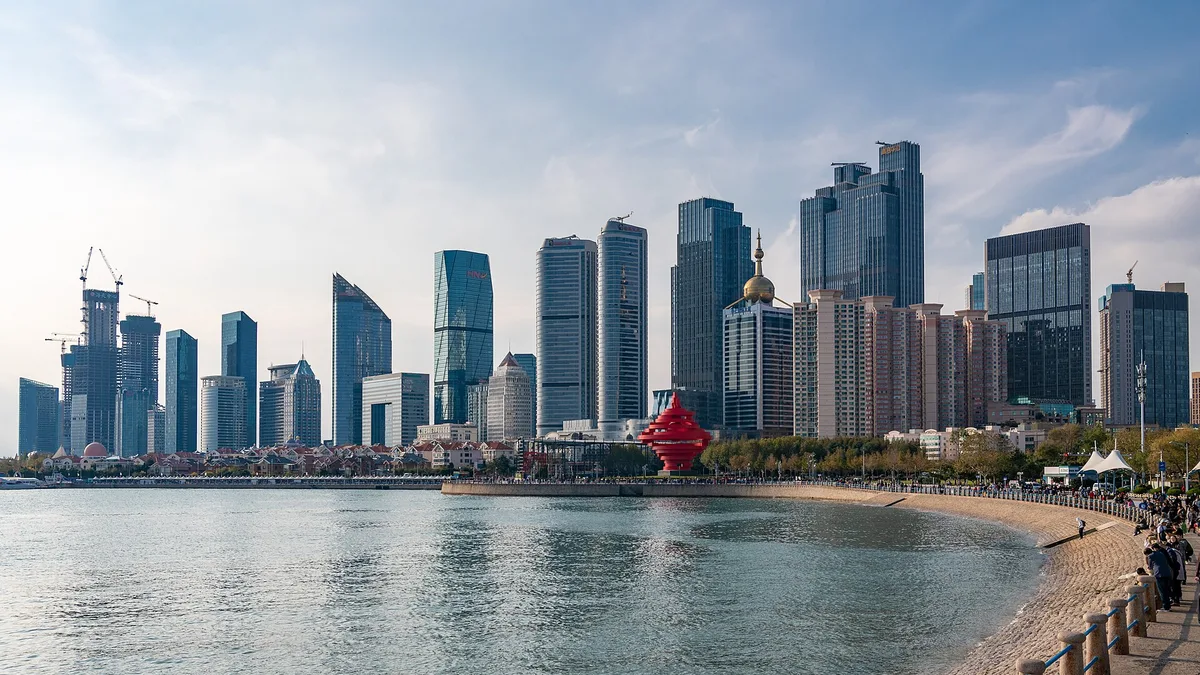
Qingdao
| Port of origin | China |
|---|---|
| Original use | Deep-water port for trade and naval operations |
| First documented | 1890s (as a German concession) |
| Primary trade lane | East Asia to Northern Europe (via the Suez Canal) |
| Typical container size moved | 20-foot and 40-foot standard containers |
| Transit time to major European port | 30 to 40 days (varies by destination and service) |
| Key competing ports in region | Shanghai, Ningbo-Zhoushan, Busan |
Origin and history
Qingdao is a major port city located on the eastern coast of China's Shandong Peninsula. Its modern development as a port began in the late 19th century during the era of foreign concessions. The city's deep-water port infrastructure was significantly expanded and modernized throughout the 20th century, particularly in the 1980s and 1990s as China's export economy grew. The port complex is a central component of the Bohai Bay Rim economic region and is administered by the Shandong Port Group. Its historical development is intrinsically linked to maritime trade routes connecting Northeast Asia with global markets. The port's establishment and growth were driven by its strategic location and natural harbor, which facilitated its rise as a logistics hub.
What it is for
The Port of Qingdao serves as a primary gateway for containerized and bulk cargo moving in and out of Northern China. It functions as a critical node in major global trade lanes, particularly those connecting Asia with North America and Europe. The port handles a vast array of goods, including electronics, machinery, agricultural products, and raw materials. Its extensive container terminals are designed to accommodate the largest container vessels in operation, enabling economies of scale in shipping. Beyond container shipping, the port facilities support roll-on/roll-off services, liquid bulk, and dry bulk operations. The port's purpose is to provide efficient cargo transfer between sea, rail, and road transport networks for regional manufacturers and consumers.
Qingdao tracking
Cargo moving through the Port of Qingdao is tracked using standard container and bill of lading numbers provided by the shipping line operating the vessel. Tracking visibility is not provided by the port authority itself but by the ocean carriers and third-party logistics platforms that manage the container's journey. Shippers must use the carrier's website or integrated logistics software to see real-time status updates, such as vessel arrival, gate-in, loading, and departure. The port's terminal operating systems interface with carrier data to provide milestones like container yard location and customs hold status. Tracking data accuracy depends on the carrier's update protocols and can be delayed during peak congestion or system disruptions. For detailed container movements within the terminal, freight forwarders often have direct access to more granular terminal data feeds.
Qingdao customer care
Customer service for port-related issues is typically handled by the specific terminal operator or the shipping line, not a central port authority helpdesk. Common inquiries relate to documentation submission, detention and demurrage charges, container release procedures, and scheduling for cargo pickup. Resolution often requires contacting the appointed freight forwarder or non-vessel operating common carrier, who acts as the direct interface with terminal and carrier operations. The Shandong Port Group provides general contact information for administrative matters, but operational problems must be directed to the relevant service provider. Disputes over charges or container damage require documented evidence and communication through the contractual chain of parties. Response times and effectiveness vary significantly depending on the specific carrier or terminal involved and the nature of the inquiry.
Qingdao branch locator
The Port of Qingdao is not a single location but a large port complex with multiple major terminal areas spread across different zones. The primary container operations are concentrated in the Qianwan Container Terminal and the Dongjiakou Port Area, which are geographically separate but under unified management. These terminals are situated along the coastline of Jiaozhou Bay, with specific addresses and gate coordinates used for trucking logistics. Shipping lines and logistics companies have their own local offices in the city of Qingdao, not within the secure port area itself. For precise directions to a specific terminal gate for container drop-off or pickup, truck drivers rely on GPS coordinates and instructions from their dispatch. The port authority website provides general maps and contact details for each terminal area, but detailed locator information is operationally specific.
Qingdao rates
The cost to move a container through Qingdao is not a single published rate but an aggregation of numerous separate charges. These charges are set by different entities, including ocean carriers, terminal operators, and government authorities. The ocean freight rate, set by the carrier, covers the sea transport from Qingdao to a destination port and is subject to volatile market conditions, fuel costs, and demand. Mandatory terminal handling charges are levied by the port operator for loading and unloading containers to and from the vessel. Additional prevalent costs include documentation fees, customs declaration fees, and potential port security surcharges. Landside transport costs from the factory to the port and any container detention or demurrage fees for late pickup also contribute significantly to the total door-to-door expense.
Pros and cons
A primary advantage of using Qingdao is its extensive connectivity and frequent sailing schedules to major global ports, providing shippers with multiple routing options. The port's modern infrastructure and deep berths allow for efficient handling of large vessels, which can lower per-unit costs on high-volume shipments. However, a significant drawback is the potential for congestion and resulting delays, particularly during peak shipping seasons or due to adverse weather, which can disrupt supply chain schedules. Shippers often report complexity and lack of transparency in the combined charges from various service providers, making total cost forecasting difficult. Another common issue is the administrative burden and documentation accuracy required for customs clearance, where errors can lead to costly holds. A frequent mistake is underestimating the inland logistics time and cost from factories in interior provinces to the port, negating some of the sea freight savings.
Who it suits
The Port of Qingdao is most suitable for manufacturers and exporters located in Northern China's industrial heartlands, including Shandong, Hebei, and Henan provinces, due to geographic proximity. It is a logical choice for high-volume container shippers who can fill entire containers and benefit from direct carrier services to their target markets. Importers of bulk commodities like grain, ore, or oil also utilize Qingdao's specialized terminals designed for such cargo. The port suits supply chains that have built-in buffer time to account for potential terminal congestion and those with experienced logistics partners on the ground. It is less suited for time-critical, low-volume shipments where air freight or combined rail-sea routes from other ports might offer more predictable transit times. Businesses with a strong focus on total supply chain cost control and the resources to manage complex logistics will find Qingdao a competitive gateway.