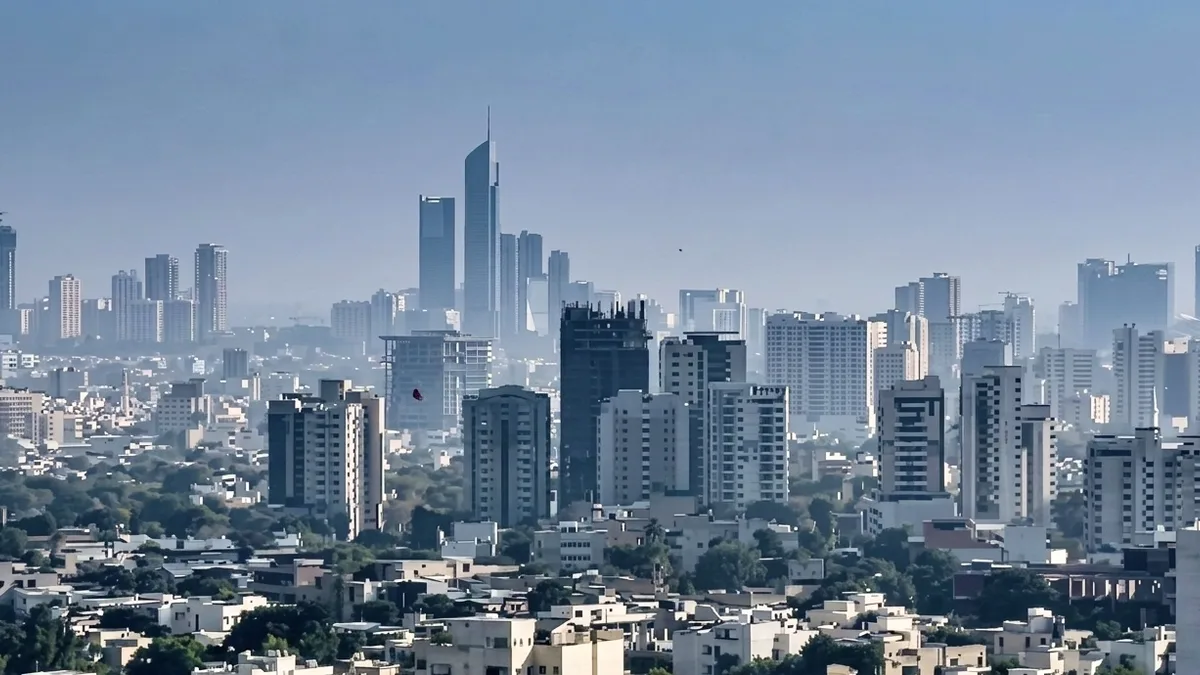
Karachi
| City | Karachi |
|---|---|
| Country | Pakistan |
| Port type | Deep-water seaport |
| Primary trade lane | Asia–Europe |
| Container terminal operator | Karachi International Container Terminal (KICT) |
| Additional terminal operator | Pakistan International Bulk Terminal (PIBT) |
| Original use | Maritime trade and naval base |
Origin and history
Karachi is a major port city located in the southern region of Pakistan, on the coast of the Arabian Sea. Its origins as a settlement date back centuries, with its modern significance beginning in the early 18th century. The city was developed into a significant port by local rulers before coming under British colonial administration in the mid-19th century. Under British rule, its port infrastructure was expanded to serve as a key gateway for the region. Following the independence of Pakistan in 1947, Karachi served as the nation's first capital and its primary port. Its growth throughout the 20th century was fueled by industrialization and migration, solidifying its status as Pakistan's economic center.
What it is for
Karachi serves as the principal maritime gateway for Pakistan, handling the vast majority of the nation's seaborne trade. The Port of Karachi, along with the newer Port Qasim located nearby, facilitates the import and export of containerized, bulk, and general cargo. It is a critical node in global supply chains, connecting Pakistan's economy to international markets for goods such as textiles, agricultural products, and manufactured items. The port complex supports the country's industrial and consumer demands by importing machinery, petroleum, chemicals, and foodstuffs. Its extensive road and rail networks distribute goods throughout Pakistan and into neighboring countries. The port's function is essential for both national economic stability and regional trade connectivity.
Karachi tracking
Cargo moving through the port of Karachi can be tracked using the systems provided by the individual port terminals or the shipping lines handling the containers. The Karachi Port Trust and Port Qasim Authority provide general vessel arrival and departure schedules on their official websites. For detailed container tracking, one must use the unique container number or booking reference with the specific ocean carrier's online tracking tool. These tools typically provide updates on the container's status, from vessel loading to port discharge and final gate-out. Some integrated logistics providers also offer tracking that covers the entire inland and ocean transit leg to and from Karachi.
Karachi customer care
Customer care for port-related services in Karachi is managed by the individual terminal operators and shipping lines, not a single centralized entity. The Karachi Port Trust and Port Qasim Authority offer contact information for administrative and operational inquiries on their official portals. For specific issues like container release, demurrage, or documentation, direct contact with the shipping line's local agent or the freight forwarder is required. Response times and service effectiveness can be inconsistent, often depending on the specific company and the nature of the inquiry. Common challenges include navigating complex bureaucratic procedures and obtaining timely resolutions during periods of port congestion. Users are advised to maintain detailed documentation and persistent follow-up for critical shipments.
Karachi branch locator
Shipping lines and global logistics providers maintain offices and agents in Karachi, primarily clustered in the city's business districts and near the port areas. These branches are not "located" in the sense of a single entity's network, as the port is a public infrastructure used by numerous independent companies. Major international container shipping lines have their country or regional offices in Karachi, often in the Saddar, Clifton, or I.I. Chundrigar Road areas. Freight forwarding and logistics companies also operate from these commercial centers to facilitate inland transportation and customs clearance. Physical addresses and contact details for these service providers are found on their respective corporate websites or through industry directories. There is no unified branch locator for the Port of Karachi itself.
Karachi rates
The total cost to move a container through Karachi is not a single published rate but an aggregation of numerous charges. These costs include ocean freight set by the shipping line, which fluctuates based on market demand, fuel costs, and trade lane dynamics. Additional mandatory charges encompass terminal handling fees at both origin and destination ports, documentation fees, and customs clearance costs. Inland transportation from the port to final destination within Pakistan constitutes a significant variable component, influenced by fuel prices and trucking availability. Importers and exporters must also account for potential surcharges, such as port congestion surcharges or peak season fees, which can be applied with little notice. Demurrage and detention charges accrue rapidly if containers are not collected or returned promptly from the port's congested yards.
Pros and cons
A primary advantage of using Karachi is its unrivaled position as Pakistan's largest and most connected port, offering the highest frequency of direct shipping services. Its extensive hinterland connections via road and rail support the national distribution of goods. However, a significant con is the chronic congestion at the port and its surrounding access roads, leading to unpredictable delays and increased container dwell times. Infrastructure, while improved, can still be strained during peak periods, affecting handling efficiency. Bureaucratic and administrative procedures can be slow and opaque, complicating clearance and increasing the risk of unexpected costs. Many importers regret choosing Karachi routing during periods of severe congestion when delays cascade through their supply chains, a common mistake being inadequate lead-time planning for these endemic delays.
Who it suits
The Port of Karachi suits importers and exporters whose supply chains are firmly anchored in Pakistan, as it is the most direct and serviced entry point. It is necessary for businesses dealing in high-volume containerized goods, such as textiles, where schedule frequency is critical. Manufacturers reliant on timely imports of raw materials or machinery for production within Pakistan often have no viable alternative to using Karachi. It is less suited for time-sensitive shipments where a day's delay carries a high penalty, as port congestion can introduce significant unpredictability. Shippers with lower risk tolerance or those requiring streamlined, predictable logistics may find the operational challenges a considerable drawback. Ultimately, it suits those who have established robust local logistics partnerships and buffer their schedules to account for the port's known operational variability.