Tanker rates hit $1m a day as shipping cash
VLCC earnings have broken the $1 million per day equivalent for the first time, while the broader ClarkSea Index reaches a record high.
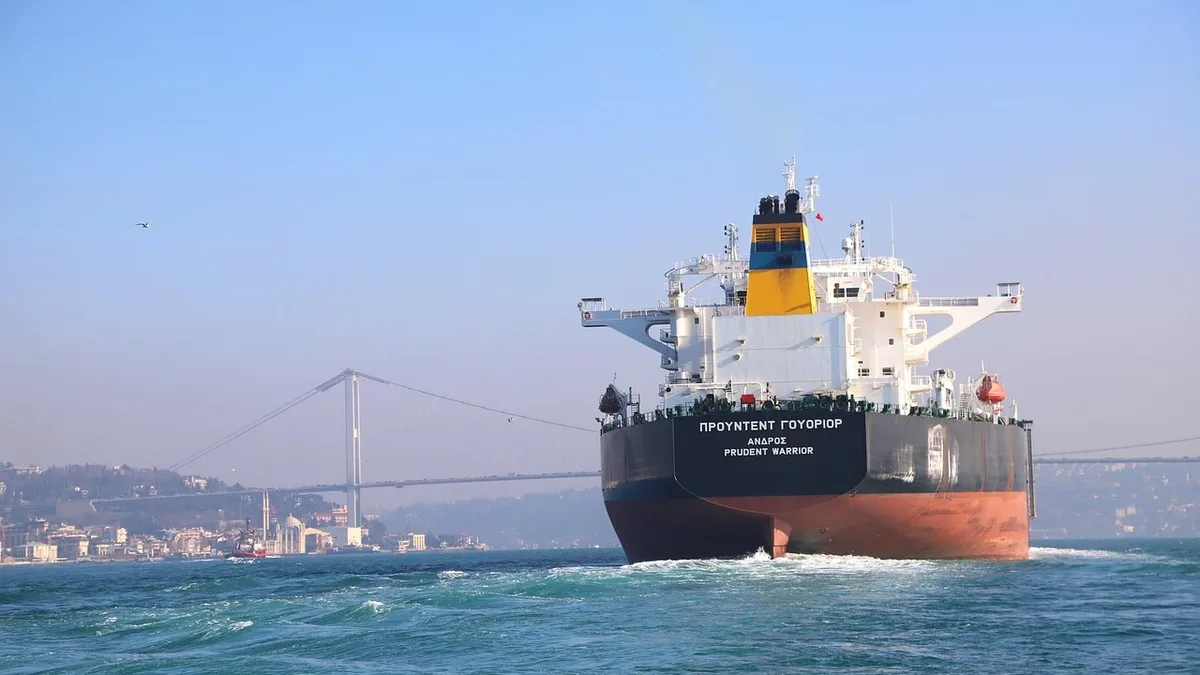
Very large crude carrier (VLCC) rates on the key Middle East Gulf to China route have broken through the equivalent of $1 million per day for the first time. According to the Baltic Exchange, VLCCs loading outside the Gulf are also earning close to that figure, with suezmax and aframax markets performing strongly and 10-year-old VLCCs now valued above newbuildings.
Across the entire shipping industry, Clarksons Research's ClarkSea Index climbed to an all-time nominal high above $56,000 per day. This surge in earnings has led to an enormous accumulation of capital within the sector.
A cash-rich industry faces tough choices
Shipping has generated approximately $3.1 trillion in cash since 2021, according to analyst Martin Stopford, who spoke at a Capital Link event in London. He noted that roughly a quarter of this sum has already been invested in new ships. The central challenge for owners is deciding what type of vessels to order, as the long-term economics of future fuels remain highly uncertain.
Research featured by Splash this week indicates that factors like carbon pricing, hydrogen costs, and feedstock availability could radically alter the viability of methanol, ammonia, and conventional fuels over a vessel's operational life. With more than half the ships operating in 2050 expected to come from orders placed before 2035, owners must make pivotal investment decisions now, despite the unclear regulatory and technological landscape.
Investments flow into companies and infrastructure
Substantial capital is also being deployed into existing shipping firms. Tanker company Hafnia spent an additional $145.1 million to increase its stake in Danish product tanker owner Torm to 18.22%. This brings Hafnia's total investment in Torm beyond $456 million, solidifying its position as Torm's largest disclosed shareholder.
In maritime infrastructure, a major new waterway opened in southwest China. The $10.2 billion Pinglu Canal stretches 134 km and provides many inland Chinese provinces with a significantly shorter route to the Beibu Gulf. The project's construction required the excavation of over 300 million cubic meters of earth and rock.
A push for practical technology solutions
With ample cash available, the focus is shifting toward practical and effective technology investments. In an interview with Maritime CEO, Aristos Philis of KeelX argued that shipping technology needs to be easier to purchase, faster to implement, and less painful to abandon. His point, relevant in a crowded vendor market, is that technology must solve a tangible problem rather than just adding another software dashboard.
A similar pragmatic approach was highlighted in a Splash Ports CEO interview with PortMiami's Jonathan Daniels. Faced with an island facility that cannot expand outwards, Daniels is preparing for growth by building higher, maximizing existing infrastructure, and deploying technology to target specific bottlenecks as the port updates its masterplan for 2050.
Throughout the week, SplashTech has published analysis from its first Digital Market Report, examining topics including AI, cyber risk, and the difficult business of determining which technologies deliver a genuine return on investment. Separately, numerous recent publications on future fuels paint a concerning picture, suggesting today's large orderbook of new ships may not be well positioned to meet future environmental targets, a topic explored in this week's Splash Wrap podcast.