Maersk to Test Rotor Sail on Containership in 2027
Maersk plans to install a 35-meter rotor sail on an 8,700-TEU containership for Atlantic service testing starting in 2027.
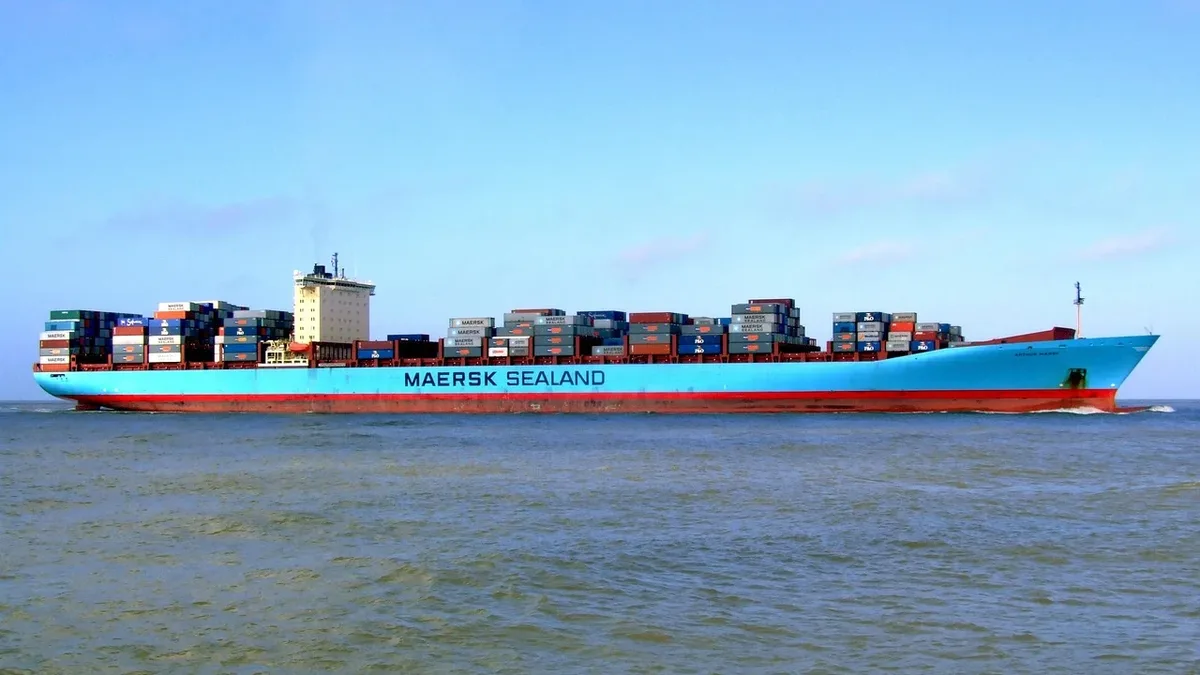
Maersk will install a 35-meter rotor sail on one of its 8,700-TEU containerships, with testing set to begin in 2027 on regular Atlantic services. This project is expected to be the first rotor sail installation on a containership.
Wind propulsion is returning to commercial shipping after more than a century of decline. Over 100 large merchant ships now use modern wind systems, representing over 5 million deadweight tons of capacity. These systems are not meant to replace engines but to work alongside them, reducing fuel consumption when wind conditions allow.
Projects Across Vessel Types
The technology is moving beyond demonstrations. In 2026, several significant projects were announced. Vale's 400,000-dwt Sohar Max, one of the world's largest ore carriers, is already fitted with five 35-meter rotor sails expected to cut fuel use by up to 6%. Two VLCCs for Japan's Idemitsu Tanker are scheduled to receive Norsepower rotor sails upon entering service in 2028.
LNG carriers may soon follow. Korean Register, HD Hyundai Heavy Industries, BAR Technologies and the Liberian Registry are studying a 174,000-cubic-meter LNG carrier fitted with BAR Technologies' WindWings. The design moves the ship's accommodation block forward to create deck space for large rigid sails.
How Modern Wind Systems Work
Modern systems are heavily automated. Crews do not trim sails by hand. Instead, the systems adjust based on wind speed, direction, vessel speed and heading. Weather-routing software can help ships alter course slightly to capture more wind without major schedule disruptions.
Different technologies are in use. Some systems use spinning cylinders, known as rotor sails, which create thrust through the Magnus effect. Others resemble vertical aircraft wings. Bound4blue's eSAIL uses suction to increase aerodynamic lift. Developers are also working with rigid foils and soft-sail systems.
| System Type | Example Vessel | Key Feature |
|---|---|---|
| Rotor Sail | Vale's Sohar Max | Five 35-meter spinning cylinders |
| Suction Sail | Atlantic Orchard (juice carrier) | Four 26-meter sails using suction |
| Rigid Wing Sail | Planned HD Hyundai LNG carrier | BAR Technologies' WindWings |
| Traditional Rig | Neoliner Origin (ro-ro) | Two 76-meter carbon-fiber masts |
The Economic and Regulatory Push
The driving force is economics, not nostalgia. Shipowners face pressure to reduce fuel consumption and emissions. Low-carbon fuels remain expensive and scarce. Wind, by comparison, is free. The technology also offers the advantage of being retrofittable to existing ships.
Savings vary. Industry estimates put fuel savings for retrofit projects in the single to low double digits. Purpose-built ships designed around wind propulsion can achieve more. On a large vessel burning thousands of tons of fuel yearly, even modest savings add up.
Regulation is catching up. The International Maritime Organization has begun work on interim safety guidelines for wind propulsion systems, with the first guidelines expected later this decade. The industry is gaining real operating experience as tankers, bulkers, and ro-ros accumulate commercial sea time with these systems.
Integration and Limitations
A key development is integration. Norway's WINTEGRATE program brings together companies like Kongsberg Maritime and DNV. The goal is to integrate wind propulsion with engines, batteries, power-management systems, and voyage planning, rather than treating it as a standalone add-on.
Limitations remain. Wind is unpredictable. Sails take up deck space and must withstand harsh conditions. Bridges, cranes, and terminals can restrict installation. Some trade routes are better suited to wind than others.
Engines will remain essential for keeping schedules, maneuvering, and operating in adverse weather. Wind is becoming just another part of the propulsion mix for a modern fleet. After a century of escaping dependence on the wind, shipping is learning not to ignore free energy when it blows in the right direction.