MIA adopts AI cargo system to cut congestion and boost efficiency
Miami International Airport has launched an AI-powered cargo community system with Kalé Logistics to simplify operations, reduce emissions, and manage its record freight volumes, with full implementation expected over 18 months.
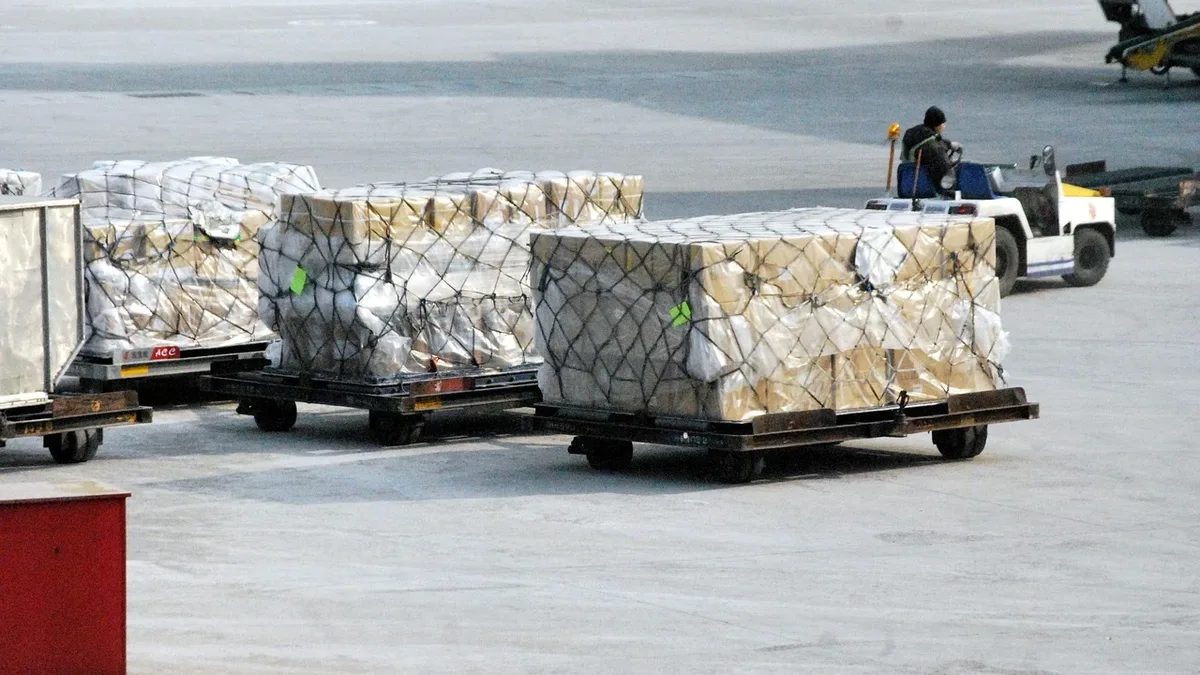
Miami International Airport has launched a new AI-powered airport cargo community system (ACCS) through its partnership with Kalé Logistics. The platform is available to freight forwarders, cargo handlers, truckers, carriers, and ground handlers, making MIA the world's largest cargo airport to adopt an AI-powered communications platform.
Cargo trucks currently arrive at MIA with limited information about arrival times and cargo types, increasing congestion, carbon emissions, and inefficiencies. The airport operates about 190 cargo-only flights per day and more than 1,600 daily truck trips. The new system is designed to speed up communication and decrease congestion at the Florida cargo gateway. It will improve information sharing, advanced planning, truck scheduling, reduce waiting times, and increase productivity across MIA’s cargo ecosystem.
System addresses current cargo inefficiencies
The AI-based system will eliminate paper-based transactions and manual scheduling to reduce truck congestion. It combines modules for scheduling truck pick up and delivery, transmitting electronic delivery orders, electronic payments, and filing customs documents. Stakeholders including airlines, logistics companies, motor carriers, customs brokers, warehouse operators and regulators will exchange data on a common platform.
Kalé’s system will use APIs and middleware to connect to each entity involved in moving cargo through MIA. AI will guide workflows using traffic pattern prediction and wait time data to optimize truck scheduling and unloading times. A documentation agent will convert PDF documents into formats compatible with receivers’ systems. Truckers can query a generative chatbot in English or Spanish for shipment status and pickup information. AI will also help terminal operators identify trade flows and patterns, such as alerting them to expect an influx of electronic shipments in September.
Projected environmental and cost benefits
Kalé Logistics estimates full implementation could save 5,900 U.S. tons of CO2 emissions, 3,000 trees, and up to $250 million in operational costs annually. The ACCS implementation has the potential to save up to $250 million in operational costs annually. Miami-Dade County Mayor Daniella Levine Cava stated the project makes the airport more future-ready, supports international trade and jobs, and ensures industry leadership in efficiency and sustainability.
Implementation timeline and scope
Atlanta-based Kalé will hold community workshops starting in January and implement the system over 18 months. MIA plans to implement the whole cargo community system, starting with electronic document sharing and truck traffic management. Kalé Logistics described the platform as foundational digital infrastructure for linking the airport with international partner airports and trade lanes.
The launch was announced at The International Air Cargo Association’s Air Cargo Forum in Miami on 27 October. MIA handled a record 3.4 million U.S. tons of freight in 2025, up 9.4% since 2024, making it the busiest freight airport in the U.S. and third busiest in the world. Airports Council International also reported a 13.6% year-on-year rise in cargo volumes to 3.1 million tonnes last year. MIA is the busiest non-express cargo airport in the continental United States and the largest in the world for international capacity, excluding narrow-body aircraft.
Kalé Logistics Systems offers cargo community systems at more than 125 airports and runs digital ecosystems at more than 75 maritime ports. Its systems are operational at Atlanta, Boston, and JFK New York, with implementation underway in Philadelphia and Chicago-Rockford. In the U.S., participation is voluntary, with 90% adoption at WFS New York and 60% to 70% at other locations. The best community systems achieve 98% to 99% adoption, requiring initial effort but leading to long-term efficiency. Kalé previously earned recognition under its former title, Kale Logistics Solutions, from the United Nations and other global platforms.
MIA plans to implement the whole cargo community system, starting with electronic document sharing and truck traffic management.