Shipping Industry Demands IMO Finalize Decarbonization Rules
Nine major shipping associations have jointly called on governments to finalize a practical and enforceable global climate framework at the IMO, warning that regulatory uncertainty threatens billions in clean shipping investments.
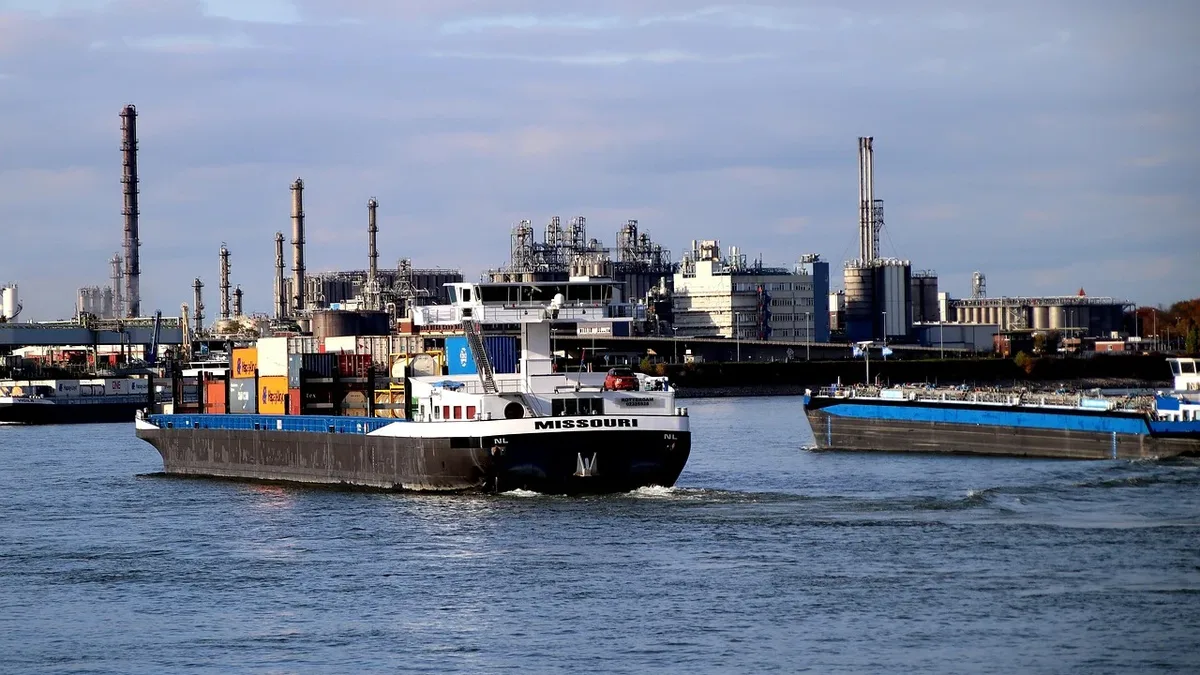
Nine major shipping associations issued a joint statement on Wednesday calling for practical, enforceable, and globally consistent IMO climate rules to enable investment in cleaner ships and fuels. The industry is demanding regulatory certainty to sustain massive investments ahead of critical negotiations on the IMO's Net-Zero Framework.
The appeal calls for a regulatory framework that accounts for fuel costs and availability while providing flexible compliance mechanisms. Proposals by governments remain under consideration, but the industry emphasizes the need for an achievable, enforceable, and stable system that incentivizes alternative fuel development. The framework must be pragmatic, fit for purpose, and underpinned by clear and enforceable obligations to drive decarbonization, support fleet renewal, and maintain a global level playing field. Industry groups stressed that any agreement must avoid overlapping national and regional regulations. Regulations should reward verifiable emission reductions and incentivize, financially and technically, further investments in maritime decarbonization.
Investment certainty hinges on regulatory stability
Shipowners and fuel producers require global regulatory certainty to sustain billions in ship investments and alternative fuel development amid ongoing IMO negotiations. Shipping companies have already invested billions of dollars in new ships capable of using alternative low GHG fuels, innovative technologies, and fuel-flexible solutions. Continued industry investment and effective implementation depend on global regulatory certainty and the reliable production and cost-competitiveness of alternative fuels at scale. An effective global regulatory framework is essential to provide clear, predictable production pathways for further emissions reductions. The groups warned that regional or national measures could result in duplication of compliance requirements for ships and multiple charges for the same emissions.
IMO negotiations face critical timeline and political divisions
The upcoming MEPC 85 meeting will determine the framework's adoption, with key divisions over carbon pricing, fuel standards, and regional regulation overlaps. Governments are preparing to revisit the IMO’s proposed Net-Zero Framework after its formal adoption was postponed in October 2025. The negotiation timeline is now critical.
| Event | Dates |
|---|---|
| IMO working group meeting | November 23-27, 2026 |
| MEPC 85 session | November 30 to December 3, 2026 |
| Potential resumed extraordinary session | December 4, 2026 |
Negotiators face deep divisions over carbon pricing, compliance costs, and treatment of different marine fuels. Opposition to the framework includes the United States and several oil-producing countries. Achieving an agreement requires constructive engagement by all Member States to identify areas of convergence and develop a global solution that considers strategic ambition and market readiness. The industry remains committed to working constructively with all IMO Member States to finalize a meaningful and effective global regulatory framework.
Industry backs flexible compliance, avoids regulatory overlap
Shipping groups stress that flexible compliance mechanisms and harmonization of regional rules are essential to prevent costly duplication for global fleets. The framework should provide optional compliance mechanisms to manage the transition, recognizing the current unavailability of commercially viable zero or near-zero GHG fuels and technologies for the majority of the existing fleet. Shipping associations have called for reviewing or harmonizing the EU Emissions Trading System and FuelEU Maritime requirements once an international framework is established. Overlapping regulations would impose unnecessary costs. The regulatory framework must also support a safe energy transition through data-driven, fuel- and technology-neutral solutions.
The organizations reaffirmed support for achieving net-zero emissions from international shipping by or around 2050, though the statement does not explicitly endorse the existing Net-Zero Framework in its current form. The outcome could shape ship design, fuel procurement, and infrastructure development for decades. The IMO Marine Environment Protection Committee’s MEPC 85 session will convene in London from November 30 to December 4, 2026, to consider the framework's adoption.