Sinokor Profits as Persian Gulf Tanker Rates
Supertanker rates from Saudi Arabia to China reached a record $656,000 per day, more than ten times the year-ago rate, as attacks in the Persian Gulf deter
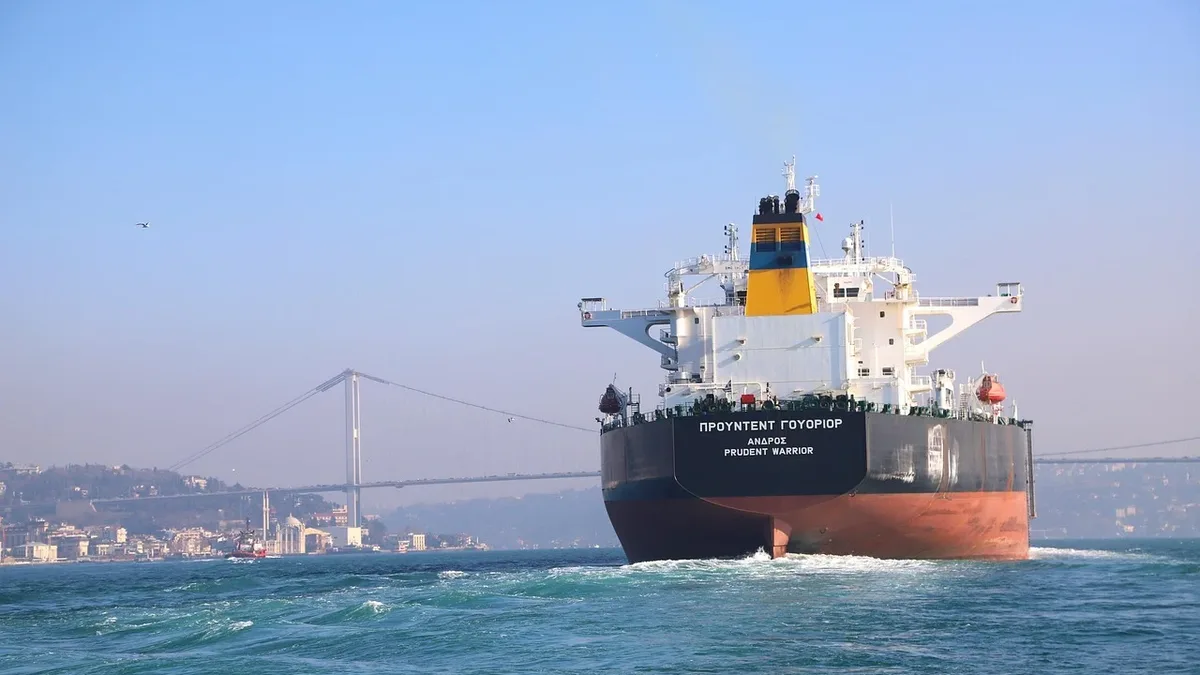
Supertankers hauling oil from Saudi Arabia to China earned a record $656,000 per day on Friday, according to Baltic Exchange data. This rate is more than ten times higher than it was a year earlier.
Few owners and crews are willing to risk the journey through the Strait of Hormuz, where Iran has been attacking ships. This has created huge premiums for the companies that do sail. There are signs that export volumes within the Persian Gulf are rising, adding to demand for ships. For the latest on global shipping routes and ports, see our fixtures page.
Sinokor's Market Move
The rate surge began late last week. Market participants say it followed an announcement from Sinokor Group. The South Korean company, led by Ga-Hyun Chung, is the world's largest supertanker player. It told the market it had hired out ships at elevated rates.
Sinokor embarked on the biggest oil tanker bet ever earlier this year. The company bought dozens of ships before the Iran war began. It is now hiring them out at heightened rates.
Disrupted Benchmark and Dual Costs
The Iran war has roiled the world's main oil tanker benchmark. The number of ships entering and exiting the Persian Gulf has become increasingly opaque. Before the conflict, shipowners and commodity traders relied on this benchmark as a proxy for global supertanker earnings. Substantial sums of derivatives are also tied to it.
Moving oil through the Strait of Hormuz now effectively comes with two shipping costs. First, there is a lump sum to get a ship through the waterway itself. Then, once the cargo is switched onto a different tanker outside Hormuz, a lower rate applies for the onward journey to China.
The cost for the second leg from Oman to China is currently about $220,000 per day. This compares with $131,000 a month ago. Detailed freight stats show the volatility in these routes.
Executive Commentary and Other Disruptions
Lars Barstad, CEO of supertanker operator Frontline Management AS, commented on the market strength. "Looking at what we thought was the strongest market we've ever seen in 2004, we're now twice that almost," he said on a Friday earnings call. He added that average tanker earnings are skewed by the soaring rates inside the Persian Gulf.
TotalEnergies SE CEO Patrick Pouyanne said earlier this week that it costs about $20 million to move barrels through Hormuz. Two tanker market participants said that amount had risen further throughout the week.
Other shipping disruptions are also boosting earnings. Attacks on Saudi tankers by Yemen's Houthis have forced the kingdom to redirect some exports. This redirection sends oil north through the Mediterranean and around Africa, adding about 30 days to a journey to Asia.
The practice of transferring cargoes onto waiting ships outside Hormuz is also disrupting the supply chain. This ship-to-ship transfer process makes deliveries take longer.
The article contains reporting from Bloomberg, published under license.