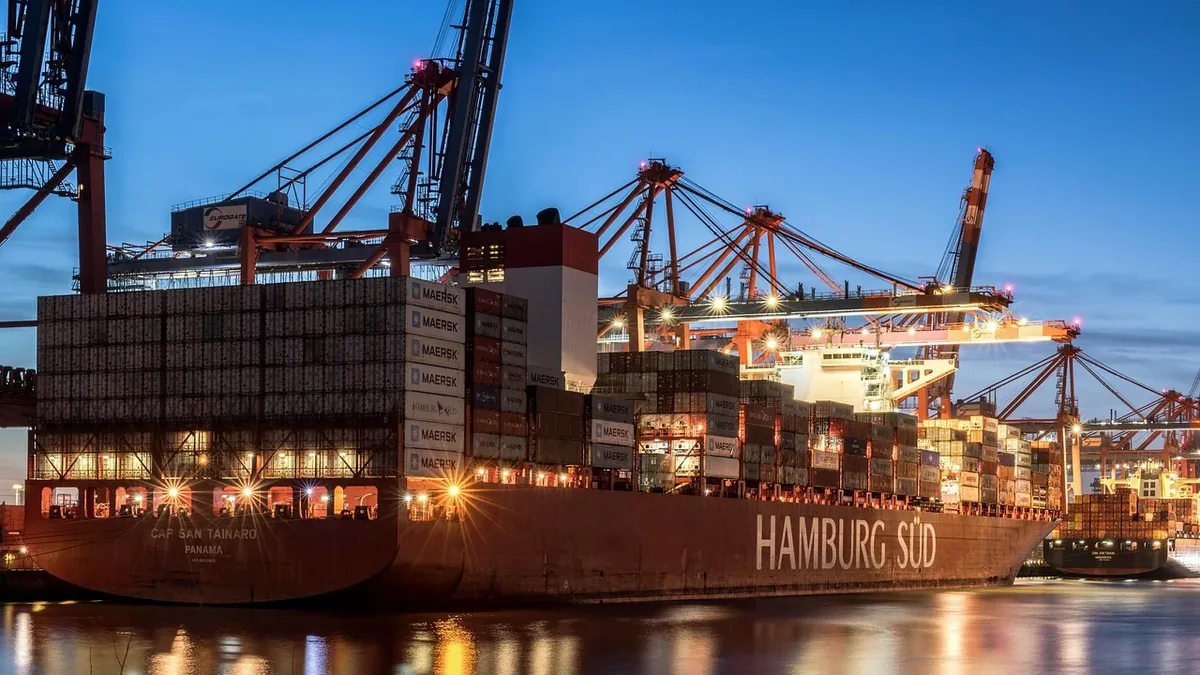
Ningbo Hamburg
| Country of origin | China and Germany |
|---|---|
| First documented | Late 20th century |
| Original use | Major containerized cargo transport corridor |
| Key ports | Port of Ningbo, Port of Hamburg |
| Typical transit time | 30 to 40 days |
| Primary cargo | Manufactured goods, machinery, electronics, consumer products |
| Common vessel size | Ultra Large Container Vessel (ULCV) |
| Shipping alliance coverage | All major global alliances |
Origin and history
The Ningbo-Hamburg trade lane is a major container shipping route connecting the Port of Ningbo in China to the Port of Hamburg in Germany. Its establishment is intrinsically linked to the explosive growth of China's export manufacturing economy and its integration into global supply chains beginning in the late 20th century. The route gained significant prominence in the 1990s and early 2000s as European demand for Chinese manufactured goods surged. The development of the Port of Ningbo, particularly the deep-water facilities at Beilun Port, enabled it to handle the largest container vessels, cementing its role as a primary load center for this corridor. Hamburg's historical role as a central European transshipment hub and its extensive hinterland connections made it a natural destination for these cargo flows. The lane is not a single service but is served by multiple global shipping alliances through their network of weekly liner services.
What it is for
This trade lane is a critical artery for the movement of manufactured goods from industrial China to consumer and industrial markets in Northern and Central Europe. It primarily transports containerized consumer electronics, household goods, textiles, furniture, and machinery from the factories of the Yangtze River Delta region. The lane also facilitates the import of European capital goods, automotive parts, and high-value manufactured products back to China, though volumes are traditionally lower westbound. It serves as a fundamental link for just-in-time supply chains for European automotive and industrial companies sourcing components from Asia. The route is a core part of the service networks of all major global container lines, offering multiple weekly sailings with direct calls or via transshipment at major hubs. Its primary function is to provide predictable, scheduled capacity for high-volume freight moving between two of the world's most significant economic zones.
Pros and cons
A primary advantage of this lane is the high frequency of sailings and extensive network coverage offered by numerous competing carriers, providing shippers with scheduling flexibility and redundancy. The port infrastructure at both ends is world-class, capable of efficiently handling the largest container vessels, which helps achieve economies of scale in shipping costs. However, the route is notoriously susceptible to congestion and delays, particularly at peak seasons or during periods of port labor disputes, which can disrupt tightly managed supply chains. Rate volatility is a significant con, with freight costs fluctuating dramatically based on market demand, vessel capacity, and bunker fuel prices, making long-term budgeting difficult. Shippers often regret selecting services based solely on the lowest rate, as this can lead to inferior reliability, longer transit times due to multiple port calls, and hidden ancillary charges. A common mistake is underestimating the inland logistics leg at either end, as congestion on road or rail connections can negate the benefits of a fast ocean transit.
Who it suits
This trade lane suits large-volume importers and exporters with steady cargo flows who can commit to long-term contracts to secure capacity and mitigate rate volatility. It is ideal for manufacturers and retailers sourcing finished goods or components from Eastern China who require regular, scheduled deliveries to distribution centers across Europe. Companies with robust supply chain management teams, capable of navigating documentation, customs clearance, and potential delays, are best positioned to use this route effectively. It suits cargo that is time-sensitive but not critically so, as typical transit times range from approximately 30 to 40 days, excluding inland transport. The lane is less suited for very small shippers with sporadic volumes, as they will typically pay higher spot rates and have less leverage with carriers. It is also a poor fit for ultra-time-critical shipments, which may require the premium of air freight, or for oversized project cargo that cannot be containerized.