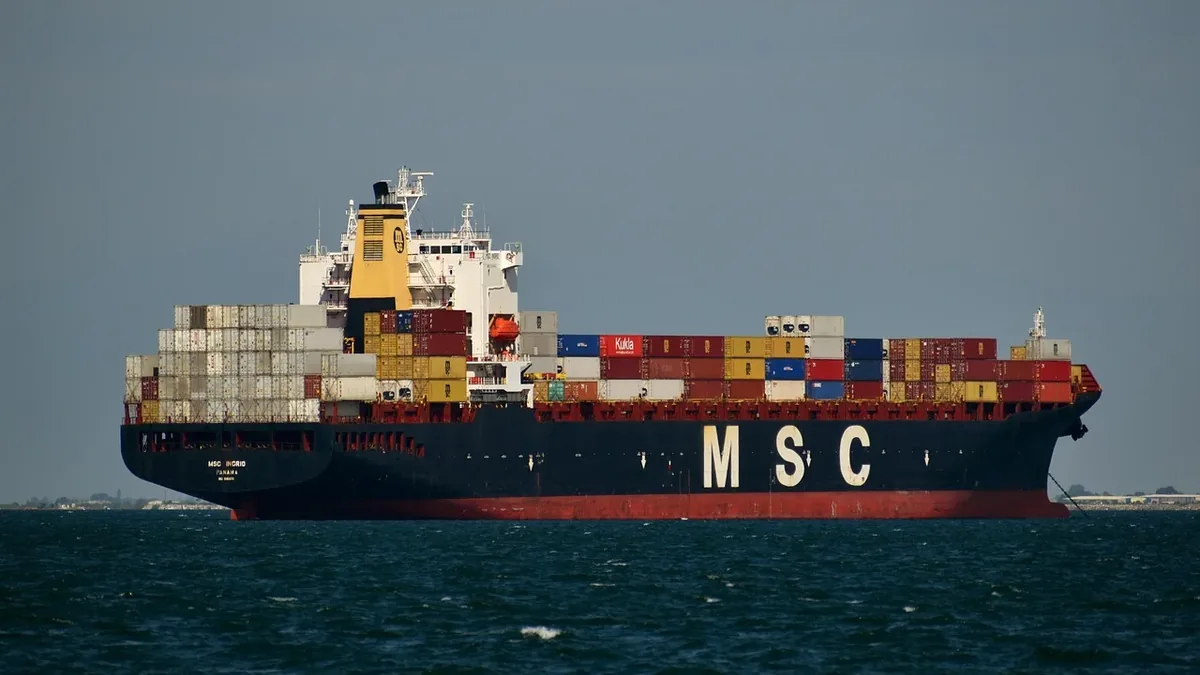
Msc
| Country of origin | Switzerland |
|---|---|
| First created | 1970 |
| Original use | Container shipping |
| Fleet size | Over 700 vessels |
| Trade lane coverage | Global |
| Container capacity | Over 5 million TEU (Twenty-foot Equivalent Unit) |
| Headquarters | Geneva |
Origin and history
MSC, the Mediterranean Shipping Company, originates from Italy and was founded in the early 1970s. The company was established by Gianluigi Aponte, who began operations with a single vessel. Its initial focus was on shipping goods within the Mediterranean region, hence the company's name. The founding period coincided with a significant era of growth in global containerized trade. From these modest beginnings, the company has grown through a consistent strategy of acquisition and organic expansion. The Aponte family has maintained control and leadership of the privately-owned company throughout its history, steering its evolution into a global carrier.
What it is designed for
MSC is designed for the global transportation of containerized freight across major international trade lanes. Its network is engineered to provide scheduled, regular service connecting manufacturing hubs with consumer markets worldwide. The carrier's operational model is built to offer shippers a high-volume, cost-competitive alternative within the liner shipping alliance system. It is structured to handle a vast array of cargo types, from standard dry containers to specialized equipment for refrigerated goods, oversized items, and dangerous materials. The design of its service portfolio aims to provide comprehensive geographic coverage, linking hundreds of ports across all continents. Fundamentally, the carrier is built for scale and efficiency in a highly capital-intensive industry.
Development and versions
The development of MSC has been marked by a prolonged and aggressive fleet expansion campaign over several decades. A significant phase of growth occurred through the strategic acquisition of second-hand vessels, which allowed for rapid scaling of capacity. In the 21st century, the company shifted towards commissioning newbuilds, eventually ordering some of the world's largest container ships. Its operational development includes the formation and participation in global vessel-sharing alliances, such as the 2M Alliance with Maersk and later the Gemini Cooperation. The company has also vertically integrated by developing significant port terminal and logistics operations under the Terminal Investment Limited (TIL) and Medlog brands. This evolution reflects a transition from a regional carrier to the world's largest container line by total fleet capacity.
Pros and cons
A primary advantage of MSC is its extensive network reach, offering direct port calls to a vast number of destinations, particularly strong in the Mediterranean, Africa, and South America. The carrier's large fleet and scale often translate to competitive freight rates in the market. However, a consistent and widely reported con involves operational reliability, with the carrier historically ranking lower on schedule reliability metrics compared to some peers. This can manifest as port omissions, schedule deviations, and unpredictable transit times, which complicates supply chain planning. Shippers sometimes report challenges with customer service and communication responsiveness during cargo tracking or exception management. The common mistake for users is selecting the carrier based solely on a low rate without building buffer time for potential delays, which can lead to stockouts or production line disruptions.
Who it suits
MSC suits price-sensitive shippers for whom absolute lowest freight cost is a primary determinant, and who have flexible inventory or production timelines. It is a pragmatic choice for businesses shipping commodities or goods with long shelf lives where a delay does not cause critical disruption. The carrier's network is particularly suited to traders moving goods to or from regions where MSC holds a dominant market position and offers the most direct routing. It can suit large-volume BCOs (Beneficial Cargo Owners) who have the internal logistics resources to manage tracking and potential irregularities. It is less suited to shippers of time-critical, high-value merchandise or those operating lean, just-in-time manufacturing models where schedule certainty is paramount. Ultimately, it suits those who can strategically balance cost savings against the inherent risks of potential service variability.