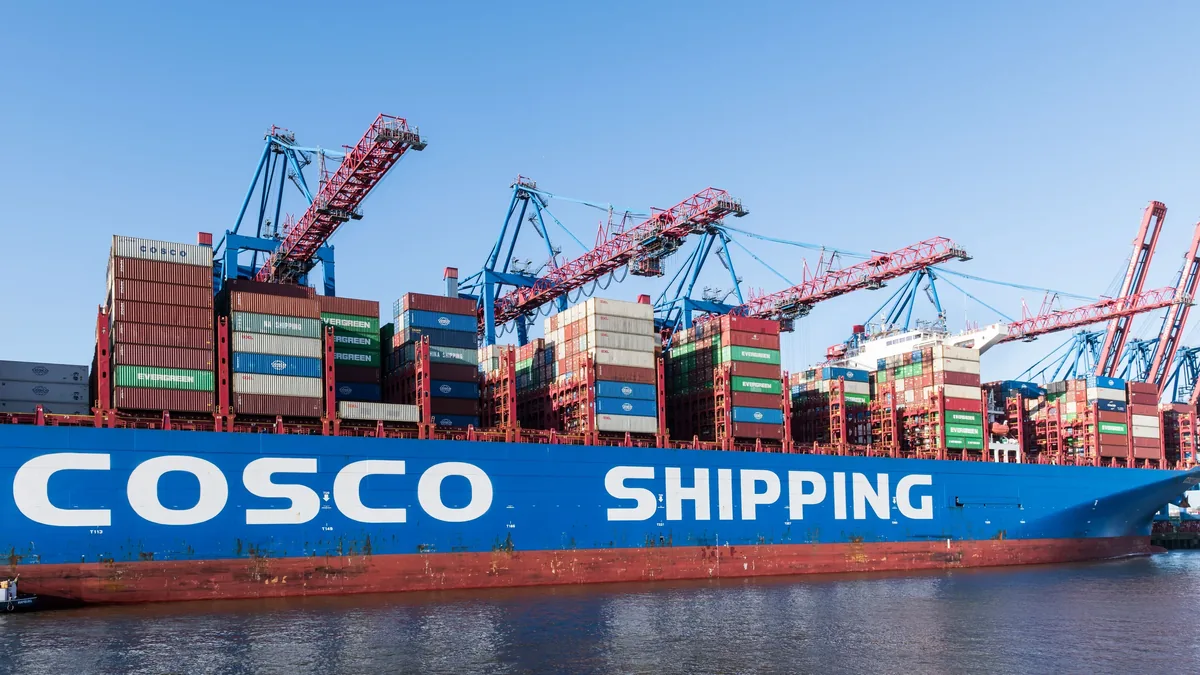
Cosco
| Country of origin | China |
|---|---|
| First created | 1961 |
| Original use | State-owned international shipping carrier |
| Parent company | China COSCO Shipping Corporation Limited |
| Container fleet size | Over 1.3 million TEU (Twenty-foot Equivalent Unit) |
| Global ranking | Among the top five container carriers by capacity |
| Trade lane presence | Global, with major routes in Trans-Pacific and Asia-Europe |
| Service network | Operates a global alliance (Ocean Alliance) with other carriers |
Origin and history
China Ocean Shipping Company, known as COSCO, was founded as a state-owned enterprise in the early 1960s in the People's Republic of China. Its creation was part of a national strategic initiative to develop an independent and competitive international shipping capability for the country. The company began with a modest fleet focused primarily on serving China's coastal and near-sea trade requirements. Throughout the latter decades of the 20th century, COSCO expanded its operations globally as China's role in world manufacturing and trade grew exponentially. A pivotal moment in its history was its restructuring and public listing on the Shanghai and Hong Kong stock exchanges in the early 2000s, which marked a shift towards modern corporate governance. The company further transformed through a major merger with another Chinese state-owned conglomerate, China Shipping Group, in the late 2010s, forming the current entity known as COSCO Shipping Holdings.
What it is designed for
COSCO Shipping is designed to be a comprehensive global logistics and container transportation provider, operating one of the world's largest fleets of container vessels. Its core purpose is to facilitate the movement of containerized goods across major international trade routes, connecting Chinese manufacturing hubs with consumer markets in North America, Europe, and beyond. The network is engineered to offer regular, scheduled sailings on these key East-West trade lanes, providing predictable transit times for shippers. Beyond simple port-to-port carriage, the company's design integrates subsidiary services for terminal operations, inland transportation, and logistics solutions, aiming to control more of the supply chain. It is fundamentally structured to support and benefit from China's export-oriented economic model, ensuring capacity and routing align with national trade flows. The scale of its operations is intended to achieve significant economies of scale, which helps in managing the high fixed costs inherent in global container shipping.
Development and versions
The development of COSCO from a regional carrier to a global leader has occurred through distinct phases of organic growth and strategic consolidation. Its initial "version" was as a purely state-run operator with limited international reach, focusing on breakbulk and early container services. The company's expansion accelerated in the 1990s and 2000s as it invested heavily in new, larger container ships to compete on the major trunk routes, a period that saw the gradual adoption of standard international operating practices. The merger with China Shipping Group in 2017 was arguably the most significant new "version," creating the COSCO Shipping entity that combined fleets, terminals, and networks to form a top-tier global alliance partner. Subsequent development has focused on integrating these assets, modernizing the fleet with newer, more fuel-efficient vessels, and expanding its ownership in critical international port terminals. The company continues to evolve by ordering new ships capable of carrying over 20,000 containers, which dictates changes in its service patterns and port calls. Its current operational structure is deeply integrated into the Ocean Alliance, a vessel-sharing partnership with other major carriers that defines its service rotations and capacity deployment.
Pros and cons
A primary advantage of using COSCO is its extensive network coverage, particularly on trade lanes originating from Asia, which provides shippers with numerous sailing options and schedule frequency. The carrier's substantial ownership in port terminals, especially in key Chinese locations and strategic overseas ports, can lead to prioritized berthing and smoother operations for its vessels. Due to its scale and integration within the Ocean Alliance, COSCO can often offer competitive freight rates in the market, which is a significant factor for cost-sensitive volume shippers. A notable con is that service reliability, measured by schedule adherence, has historically been inconsistent compared to some non-alliance peers, leading to unpredictable transit times that can disrupt tightly managed supply chains. Customer service and communication, particularly for overseas clients, are frequently cited as pain points, with difficulties in obtaining timely updates or resolving documentation issues. Furthermore, the carrier's complex corporate structure and deep ties to state policy can sometimes lead to operational decisions that prioritize network optimization or national strategic goals over individual customer flexibility.
Who it suits
COSCO suits large-volume shippers, such as major retailers and manufacturers, whose primary requirement is moving substantial container quantities at competitive rates on core trade lanes, particularly from China to the US West Coast or Europe. It is a logical choice for businesses whose supply chains are already centered on Chinese ports where COSCO has dominant terminal control, as this can streamline inland logistics and port operations. The carrier is well-suited for freight forwarders and non-vessel-operating common carriers (NVOCCs) who can leverage its extensive network to consolidate cargo and require a broad portfolio of service options. It is less suited for shippers of high-value, time-sensitive goods where schedule certainty is paramount and who may be more adversely affected by potential delays or communication lapses. Small to medium-sized enterprises with less frequent shipments may find the service experience challenging if they require high-touch support or lack the negotiating power to secure favorable terms. Finally, it suits shippers who are less concerned with carrier differentiation and more focused on fundamental port coverage and cost within a robust alliance network.
Latest Cosco news
Latest reporting
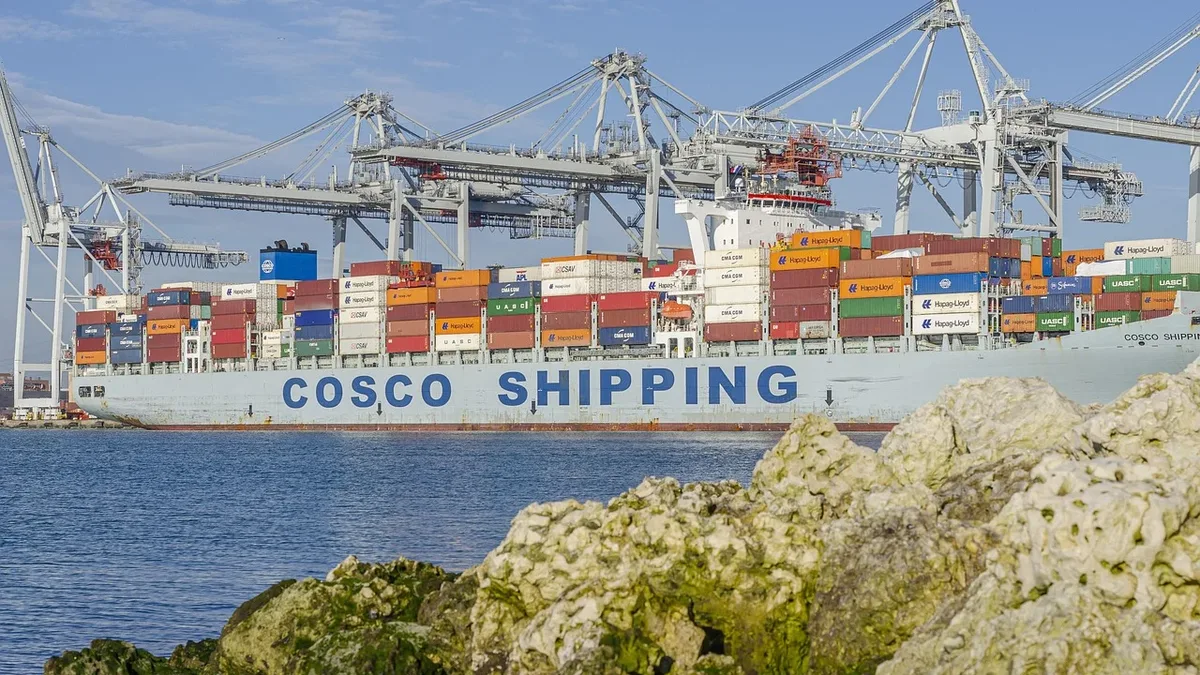
COSCO leads new containership orders from 1,800 to 22,000
A wave of new containership orders spans vessels from 1,800 to 22,000 TEU for delivery from 2028.
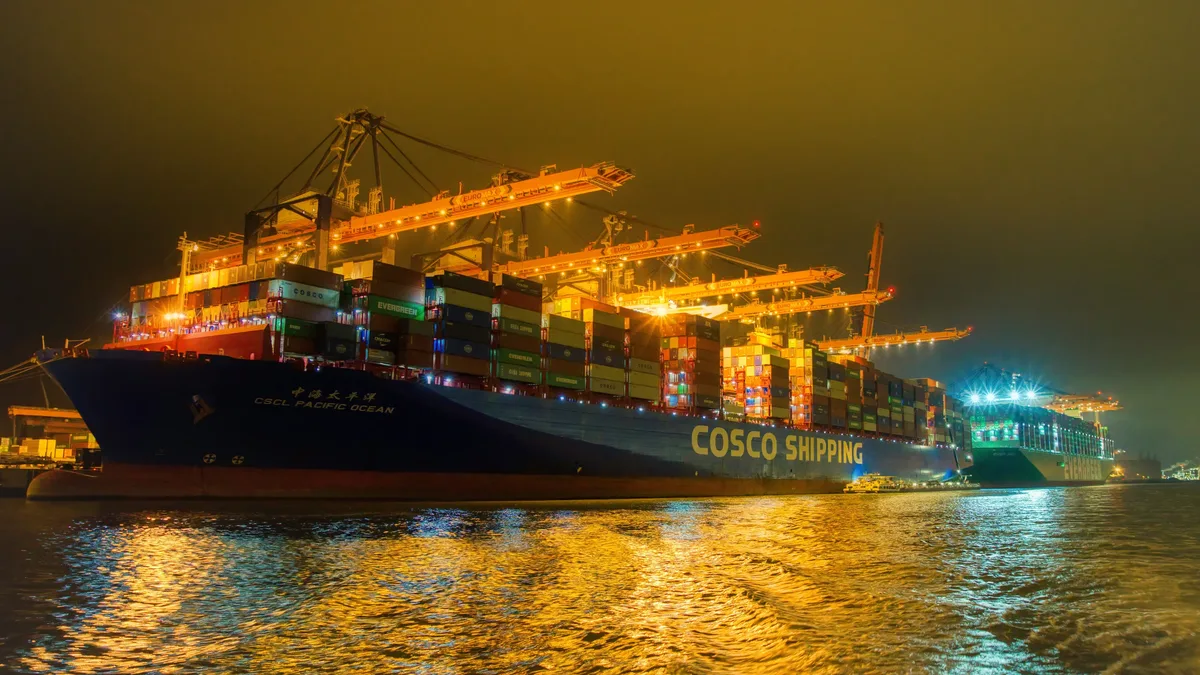
U.S. Says COSCO ships spy for China
U.S. Officials allege China's COSCO uses concealed ship equipment to collect military intelligence, a claim China's embassy denies.