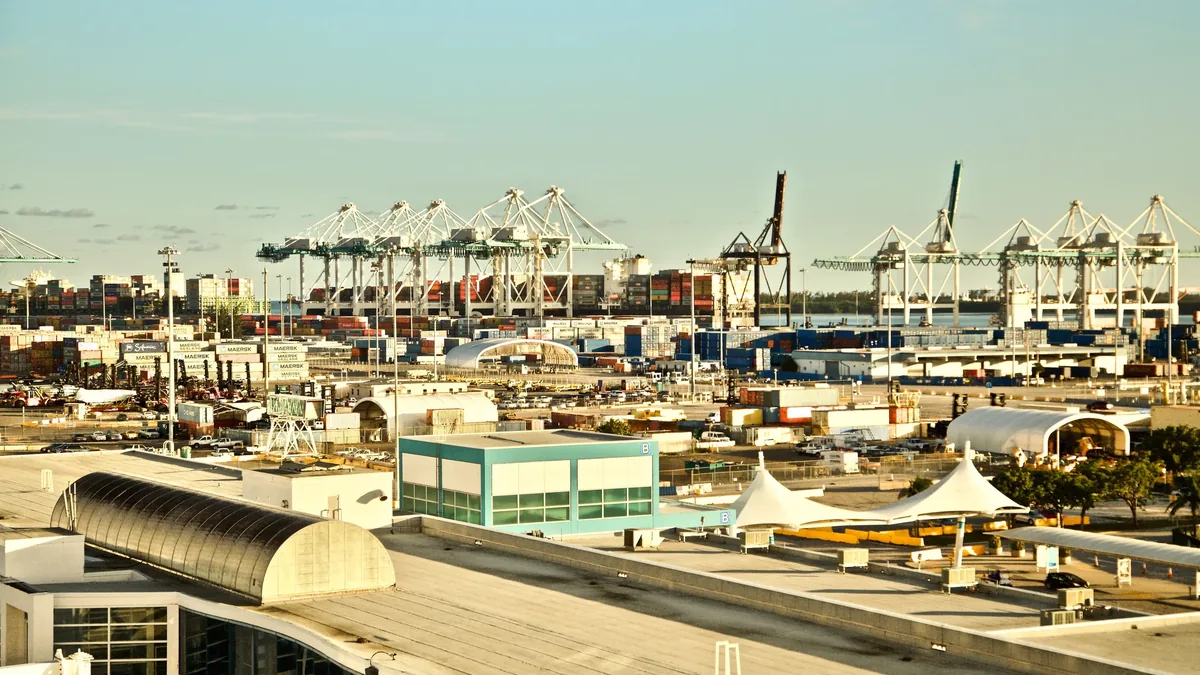
Laem Chabang
| Port name | Laem Chabang Port |
|---|---|
| Country | Thailand |
| Province | Chonburi |
| Sea | Gulf of Thailand |
| Original use | Deep-sea commercial port |
| Trade lane role | Major transshipment hub for Southeast Asia and Intra-Asia routes |
| Terminals | Multiple (container, general cargo, passenger) |
| Container capacity | Over 10 million TEUs annually |
Origin and history
Laem Chabang is a deep-sea port located on the eastern coast of Thailand in Chonburi Province. Its development began in the late 1980s as a national infrastructure project to alleviate congestion at Bangkok's inland port along the Chao Phraya River. The first terminal commenced operations in the early 1990s, marking a significant shift in Thailand's maritime logistics. The port was strategically developed to serve as the country's primary international gateway for containerized cargo. Its creation was part of a broader Eastern Seaboard development plan aimed at promoting industrial growth and export-oriented manufacturing. Expansion has occurred in multiple phases, with continuous additions of container terminals and deeper berths to accommodate larger vessels.
What it is for
Laem Chabang Port functions as Thailand's principal container port and a major transshipment hub for the Southeast Asian region. It handles the vast majority of the country's seaborne containerized trade, including exports like automotive parts, electronics, rubber, and agricultural products, and imports of raw materials and consumer goods. The port serves as a critical node in global supply chains, connecting Thai industry to major trade lanes across the Pacific, to Europe, and throughout Asia. Its deep-water capabilities allow it to accommodate the largest container vessels currently in service, which is essential for mainline East-West services. The port complex is directly linked to industrial estates and manufacturing zones in the Eastern Economic Corridor, facilitating efficient cargo movement. It also provides specialized terminals for vehicles, bulk cargo, and passenger cruise ships, though container handling remains its core function.
Laem Chabang tracking
Cargo moving through Laem Chabang is tracked via standardized container and vessel tracking systems used by shipping lines and terminal operators. Tracking information is not provided by a single central port authority but is accessed through the individual shipping line that issued the bill of lading for the container. These carriers provide online container tracking tools on their websites using the container number or bill of lading number as the primary reference. Terminal operators within the port may also offer limited visibility on the status of a container within their specific yard, such as gate-in, loaded on vessel, or discharged. For comprehensive door-to-door tracking, freight forwarders and Non-Vessel Operating Common Carriers (NVOCCs) often aggregate data from multiple sources, including the port community system. It is standard practice for shippers and consignees to obtain tracking updates directly from their contracted logistics service provider, not from the port authority itself.
Laem Chabang customer care
Customer care for port-related matters is typically handled by the specific terminal operator where a container is handled, as Laem Chabang comprises multiple privately operated terminals. General port information and regulatory inquiries can be directed to the Port Authority of Thailand, which oversees the port's administration and security. Direct customer support for shipping and documentation issues, however, is the responsibility of the individual shipping line, freight forwarder, or customs broker involved in the shipment. Issues such as container release, demurrage and detention charges, and damage claims are managed by these commercial entities according to their own tariffs and contracts. The port's operational efficiency is a focus, but end-user customer service is decentralized across the logistics chain. For vessel operators and large BCOs (Beneficial Cargo Owners), dedicated account managers at the terminal operators provide direct points of contact for operational coordination.
Laem Chabang branch locator
Laem Chabang Port is a physical infrastructure location, not a retail or service business with branches. It is situated at a specific geographic coordinate in Chonburi Province, Thailand, approximately 130 kilometers southeast of Bangkok. The port complex houses numerous independent entities, including terminal operators, shipping line offices, freight forwarding agencies, customs brokers, and trucking companies, each maintaining their own offices within or near the port area. Logistics service providers and shipping lines that serve the port will list their local agency or branch office addresses in Laem Chabang or nearby Sri Racha on their corporate websites. There is no single "branch locator" for the port; instead, shippers must locate the offices of their specific service providers. Physical access to port terminals is restricted to authorized personnel and cargo-carrying vehicles, with administrative offices often located in separate commercial buildings outside the secure port perimeter.
Laem Chabang rates
There is no single published rate for moving a container through Laem Chabang, as costs are an aggregate of multiple independent charges. The dominant cost component is the ocean freight rate set by the shipping line, which varies dramatically based on trade lane, season, vessel space availability, and negotiated contract terms. Separate to ocean freight, local port charges apply, including Terminal Handling Charges (THC) levied by the terminal operator for loading/discharging containers. Additional mandatory fees often include a Port Authority of Thailand charge, a documentation fee, and a customs clearance fee if using a broker. Landside transport costs from factories or Bangkok to the port, known as inland haulage, constitute another significant variable expense. Demurrage and detention charges can accrue rapidly if containers are not collected or returned within the allotted free time, adding substantial cost for poorly managed shipments.
Pros and cons
A primary advantage of Laem Chabang is its capacity and infrastructure, capable of handling the largest container vessels and high volumes efficiently, which ensures connectivity to global mainline services. Its proximity to Thailand's key industrial regions and integrated road/rail links provides strong hinterland connectivity for export-oriented manufacturers. A significant drawback is its susceptibility to congestion, particularly during peak shipping seasons or due to systemic issues like chassis shortages, which can lead to vessel berthing delays and extended container turnaround times. Landside transport can be a bottleneck, with trucking capacity constraints and traffic causing reliability issues for inland cargo movement. Shippers often regret using the port for time-sensitive cargo when unforeseen operational delays occur, as the complexity of the logistics chain makes quick resolution difficult. A common mistake is underestimating the total landed cost by focusing solely on ocean freight and neglecting volatile add-on charges like peak season surcharges, terminal congestion fees, and detention costs.
Who it suits
Laem Chabang is essential for large-scale manufacturers and exporters based in Thailand's central and eastern regions, for whom it is the most logical and cost-effective gateway for containerized sea freight. It suits shippers moving standard dry containers in volume on major trade lanes, who benefit from frequent direct vessel calls and competitive freight rates due to high carrier competition. The port is well-suited for cargo that is not extremely time-critical and can absorb potential short delays inherent in a high-volume hub. It is less suited for urgent shipments or low-volume shippers who lack the bargaining power to negotiate favorable rates and may struggle with the complexity of managing multiple service providers. Freight forwarders and logistics providers with established local offices and strong relationships with terminal operators are best positioned to navigate the port's operational landscape effectively. Ultimately, it is the default and dominant choice for most Thai seaborne trade, leaving shippers with limited practical alternatives for full container load movements.