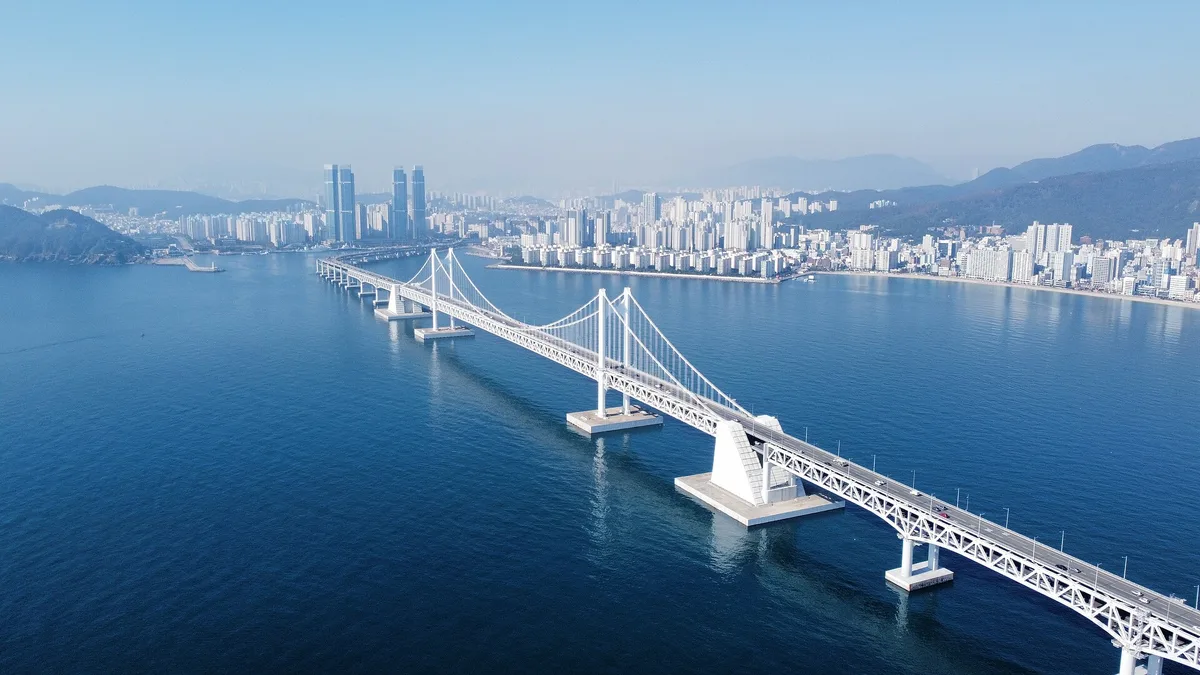
Busan
| Port of origin | Busan, South Korea |
|---|---|
| Major trade lane | Trans-Pacific |
| Primary container terminal operator | Busan Port Authority |
| Typical vessel size on lane | Ultra Large Container Vessel (ULCV) |
| Common cargo type | Manufactured goods, electronics, machinery |
| Key destination ports | Los Angeles, Long Beach, Shanghai, Ningbo |
| Port classification | Deep-water, transshipment hub |
| Annual container throughput | Over 20 million TEU (Twenty-foot Equivalent Unit) |
Origin and history
Busan is a major port city located in the southeastern region of the Korean peninsula. Its origins as a significant maritime hub date back centuries, with its natural harbor providing shelter for trading vessels. The modern port infrastructure began substantial development during the Japanese colonial period in the early 20th century. Following the Korean War, Busan served as a temporary capital and its port became a critical lifeline for reconstruction and economic aid. The port's expansion accelerated in the latter half of the 20th century alongside South Korea's rapid industrialization. Today, Busan Port is consistently ranked among the top five container ports in the world by volume.
What it is for
Busan Port functions as the primary maritime gateway for South Korea's international trade, handling the vast majority of the nation's containerized cargo. It serves as a pivotal transshipment hub for Northeast Asia, connecting major trade lanes across the Pacific and to Europe. The port complex facilitates the import of raw materials, energy resources, and consumer goods into the Korean market. Conversely, it is the primary export conduit for finished goods from Korean industries such as automotive, electronics, and shipbuilding. Its deep-water terminals accommodate the largest container vessels in operation, enabling economies of scale in ocean freight. The port's efficiency and connectivity are fundamental to regional and global supply chains.
Busan tracking
Cargo moving through Busan Port is tracked via a combination of carrier-operated systems and port community platforms. Major container shipping lines provide customers with unique booking or bill of lading numbers for tracking on their proprietary websites. The Port of Busan Authority also offers a Port-MIS system that provides visibility on vessel arrivals, departures, and cargo status based on declared documentation. Tracking typically shows milestones such as gate-in at the terminal, loading onto the vessel, vessel departure, and discharge at the destination port. For transshipped cargo, tracking may show a discharge in Busan followed by a subsequent loading onto a different vessel. Accurate tracking relies on timely data submission by all parties in the logistics chain, including shippers, freight forwarders, and terminal operators.
Busan customer care
Customer care for port-related services is fragmented across the various entities operating within Busan. The Port of Busan Authority provides general information and regulatory guidance but does not handle commercial inquiries for individual shipments. Primary customer support is provided by the specific ocean carrier moving the container or the freight forwarder managing the end-to-end logistics. Terminal operators at individual piers within Busan New Port or Busan North Port address operational issues such as container pickup and drop-off appointments. Customs brokerage services, which are essential for cargo clearance, are offered by separate licensed firms. Dispute resolution for lost, damaged, or delayed cargo is governed by the terms of the bill of lading and involves the carrier directly. There is no single, unified customer service point for all port functions.
Busan branch locator
As a physical port complex, Busan does not have "branches" in the traditional commercial sense. The port's operations are geographically distributed across several key zones, primarily Busan New Port on Gaduk Island and the older Busan North Port. Major global container shipping lines maintain their own local offices or agencies in the city of Busan to manage bookings and documentation. Similarly, international freight forwarding and logistics companies typically have branch offices or partnered agents located in Busan's central business districts or near port gates. Terminal operations are managed by specific terminal operators, such as Hanjin, Hyundai, or PNC, each controlling designated berths within the port. Supporting services like customs brokerage, trucking companies, and container freight stations are also clustered in the industrial areas surrounding the port infrastructure.
Busan rates
There is no single published "Busan rate" for moving a container, as costs are determined by commercial agreements between shippers and carriers. The total cost for moving a box along a trade lane from or to Busan is a composite of multiple charges. The ocean freight rate, set by shipping lines or alliances, forms the base cost and fluctuates based on market demand, fuel costs, and trade lane competition. This is typically supplemented by a multitude of local charges in Busan, which may include Terminal Handling Charges (THC), Bill of Lading fees, and documentation fees. Additional costs arise from inland transportation to/from the port, customs clearance duties and brokerage fees, and potential warehousing. Rates are highly volatile and can change weekly, influenced by global events, peak season surcharges, and individual carrier pricing strategies.
Pros and cons
A primary advantage of using Busan Port is its exceptional connectivity, with frequent direct sailings to virtually every major global port, minimizing the need for complex transshipment. Its modern infrastructure, particularly in Busan New Port, allows for rapid vessel turnaround and efficient container handling, reducing port delay risks. However, a significant con is the complexity and opacity of the total landed cost, as the proliferation of local surcharges and fees can make accurate budgeting difficult for shippers. Congestion can occur, particularly at older terminals or during peak seasonal volumes, leading to terminal appointment delays and equipment shortages. The fragmented nature of service providers means that resolving a problem often requires navigating multiple uncoordinated companies. Shippers who fail to understand and account for all local accessorial charges often regret their cost calculations when the final invoice arrives.
Who it suits
Busan is ideally suited for manufacturers and exporters in South Korea's industrial heartlands, such as Ulsan and Changwon, due to its proximity and integrated logistics corridors. It serves large-volume shippers and Beneficial Cargo Owners (BCOs) who have the leverage to negotiate direct service contracts with shipping lines for predictable capacity and rates. The port is a natural choice for cargo destined for or originating from transshipment markets in Northeast Asia, such as Japan or Russia's Far East, due to its hub status. It is less suited for very small shippers or one-time exporters who may find the complexity of the process and the fee structure daunting without a freight forwarder. Busan is also a critical port for time-sensitive, high-value electronics and automotive parts, where schedule reliability and frequent sailings are paramount.