Evergreen
| Country of origin | Taiwan |
|---|---|
| First created | 1968 |
| Original use | Container shipping and logistics |
| Trade lane | Major East-West routes (e.g., Asia-Europe, Transpacific) |
| Container capacity | Very large (Ultra Large Container Vessel fleet) |
| Fleet size | Large global fleet |
| Corporate structure | Private, family-controlled group |
Origin and history
Evergreen Marine Corporation is a global container shipping and logistics company founded in Taiwan. Its establishment occurred in the late 1960s, a period of rapid industrialization and growing export trade in East Asia. The company was founded by Dr. Yung-Fa Chang, beginning with a single second-hand vessel. Its early operations focused on freight services from Taiwan to Southeast Asia, aligning with regional economic patterns of the time. Through strategic expansion and fleet development, Evergreen grew to become a central player in global containerized trade by the 1980s. The company's history is fundamentally tied to the post-war economic rise of Taiwan as a manufacturing and shipping hub.
What it is designed for
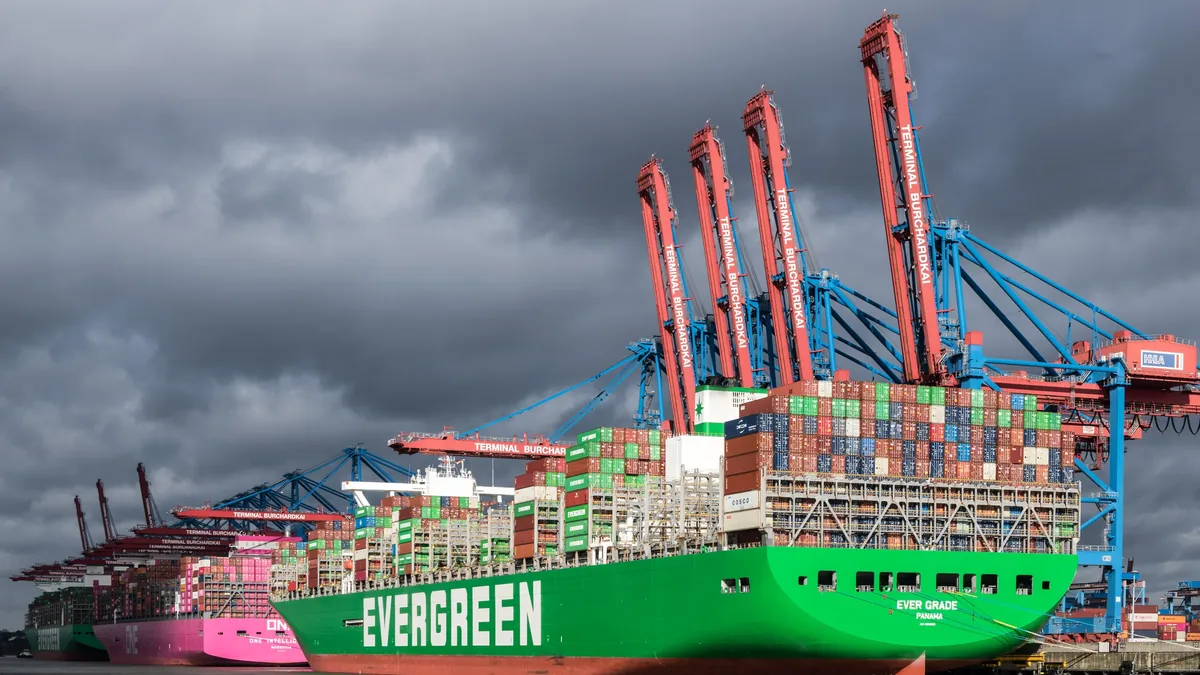
Evergreen is designed for the ocean-based transportation of standardized containerized cargo across global trade lanes. Its core service is providing scheduled, regular sailings on fixed routes connecting major ports worldwide. The operation is built around a fleet of container vessels of various sizes, from smaller feeder ships to ultra-large container vessels capable of carrying over 20,000 twenty-foot equivalent units (TEUs). The network is engineered to integrate with land-based transportation, including rail and trucking, to offer door-to-door logistics solutions. A key design principle is the operation of alliance-based services, where Evergreen shares vessel space and port calls with other carriers to optimize network coverage and efficiency. The entire system is intended to provide shippers with reliable, cost-effective capacity for moving manufactured goods, raw materials, and consumer products.
Development and versions
The company's development is marked by distinct phases of fleet modernization and network expansion. A significant early milestone was the initiation of its first round-the-world container service in the 1980s, which established its global operating scope. Subsequent development involved continuous upsizing of its vessels to achieve economies of scale, progressing through Panamax, Post-Panamax, and New Panamax classes. The introduction of the "L-Type" and later the "G-Type" series of vessels represented iterations on hull design and engine technology aimed at improving fuel efficiency and cargo capacity. Evergreen's operational structure has also evolved, including the creation of distinct service brands like Evergreen Line and Italia Marittima to manage different regional trades. The company's ongoing development is characterized by its participation in major global shipping alliances, which define its current service versions and port rotations.
Pros and cons
A primary advantage of Evergreen is its extensive global network, offering broad coverage across major East-West trades and numerous regional routes, which provides shippers with multiple routing options. The company maintains a large, modern fleet that generally meets industry standards for reliability and transit times on core lanes. However, a significant con is that, like all major carriers, its service reliability can be severely impacted during periods of port congestion or global supply chain disruption, leading to unpredictable schedule delays. Shippers sometimes report challenges with customer service responsiveness during peak demand or operational crises, which can complicate exception management. A common mistake for users is selecting Evergreen based solely on a competitive spot rate without fully accounting for potential ancillary charges or the specific port pair performance, which can vary by trade lane. Some freight forwarders regret using the carrier for time-sensitive cargo during the off-peak season when sailing frequencies may be reduced on certain routes, potentially leading to missed connections.
Who it suits
Evergreen suits large-volume shippers and Beneficial Cargo Owners (BCOs) who require consistent, high-capacity service on major trade lanes, particularly between Asia and North America or Europe. It is a practical choice for businesses with standardized logistics needs that align with the carrier's fixed weekly schedules and established port rotations. The carrier is also suited to shippers who value being part of a global alliance network, as this can provide contingency options and broader service coverage. Manufacturers and retailers with steady, predictable cargo flows can effectively negotiate long-term contracts with Evergreen to secure capacity. It is generally less suited for highly time-critical, one-off shipments where absolute schedule certainty is the paramount concern, or for shipments requiring complex, specialized equipment beyond standard dry containers. Small to medium-sized enterprises often engage Evergreen effectively through freight forwarders or Non-Vessel Operating Common Carriers (NVOCCs) who can consolidate space and manage the booking process.