Asia Air Freight Faces Uneven Tech-Driven Demand in October
Post-Golden Week air cargo demand is rebounding unevenly, with technology shipments to the US driving capacity shifts that tighten options for Europe.
The Asia air freight market is entering the traditional fourth-quarter peak with uneven pressure developing across origins and cargo types as factories reopen after Golden Week. A CH Robinson report found that as air cargo heads towards the peak, conditions are diverging sharply. October begins with a temporary lull during the Oct. 1-7 holiday, followed by a rebound as export cargo returns mid-month. Factories reopening are expected to lift volumes in the next week.
Tech demand reshapes transpacific flows
Strong demand for technology and new-product freight to the US is driving airlines to prioritise transpacific lanes. Asia Pacific-to-US demand was already running 17% above last year in mid-September, with several technology-heavy origins showing stronger gains. Technology-related demand, such as servers, semiconductors and other electronics, remains one of the strongest demand drivers. New consumer-device launches are adding another layer of time-sensitive cargo.
Asia-origin pricing could firm more noticeably from mid-October, particularly on transpacific lanes with high concentrations of technology and new-product freight. If carriers adjust their schedules to capitalise on the growing tech demand to the US, this could leave shippers with goods going to Europe with fewer options, especially if they require freighter aircraft rather than bellyhold.
Impact on Europe and intra-Asia lanes
If more freighter capacity is directed toward US-bound services, shippers moving freight to Europe or within Asia may see fewer workable options. The Asia-Europe trade is under less broad pressure than the transpacific, even though certain technology-heavy origins may tighten. Asia Pacific-to-Europe volumes remain below last year, particularly on e-commerce-heavy lanes.
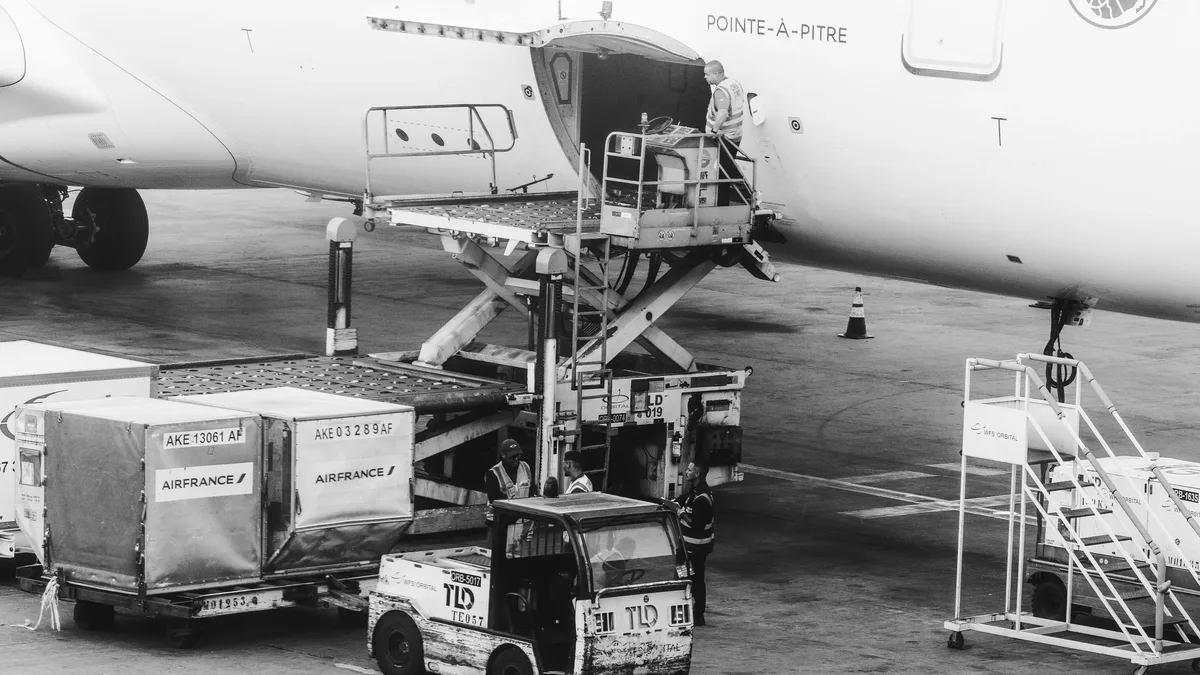
Specialised shipments face particular constraints. Oversized, pharmaceutical, temperature-controlled, project freight, and other shipments requiring specialized or freighter capacity continue to have fewer options than standard cargo that can move on passenger aircraft. Passenger belly space can accommodate a large share of general freight, but it does not replace freighters for every commodity. Shippers should not assume that ample Trans-Atlantic capacity translates into flexible choices for every shipment type.
Broader freight and seasonal influences
General freight is expected to increase more gradually as manufacturers and retailers bring in inventory ahead of early Black Friday sales, Cyber Monday, and year-end demand. E-commerce, which has in the past few years been one of the major drivers of air cargo demand, is predicted to play a smaller role this peak season as a result of tariff changes in the US and Europe. Changes in tariff rules for low-value imports reduced some e-commerce flows into the United States.
October demand is therefore expected to be driven more by technology, new-product introductions, industrial cargo, and some time-sensitive replenishment. Another factor that may impact the peak season is typhoon season. Modal transfer from ocean due to disruption to container shipping operations has also affected the market in recent years.
Origin-specific conditions and outlook
Booking conditions will vary significantly by origin due to local cargo mix, gateway performance, and airline schedules. China, Southeast Asia, and India should be assessed separately. If the flow of general cargo remains measured and post-holiday demand is concentrated mainly in technology and time-sensitive freight, booking limitations are more likely to remain origin- and departure-specific rather than spreading broadly across Asia.
Late September was shaped by quarter-end activity and cargo pulled forward ahead of the holiday. The September market update noted that preferred departures could fill before broader rate increases appeared. In October, the test is whether the post-Golden Week rebound keeps preferred departures full long enough to influence airline allocations and freighter deployment. CH Robinson said: "Airlines often respond to concentrated demand by adjusting aircraft deployment, schedules, and allocations toward lanes where booking activity is strongest."
How quickly that freight comes back will help define capacity conditions for the rest of Q4.