US Deploys Third Carrier, 10,000 Troops to Middle East
The Pentagon is sending a third aircraft carrier strike group and up to 10,000 additional sailors and Marines to the Persian Gulf.
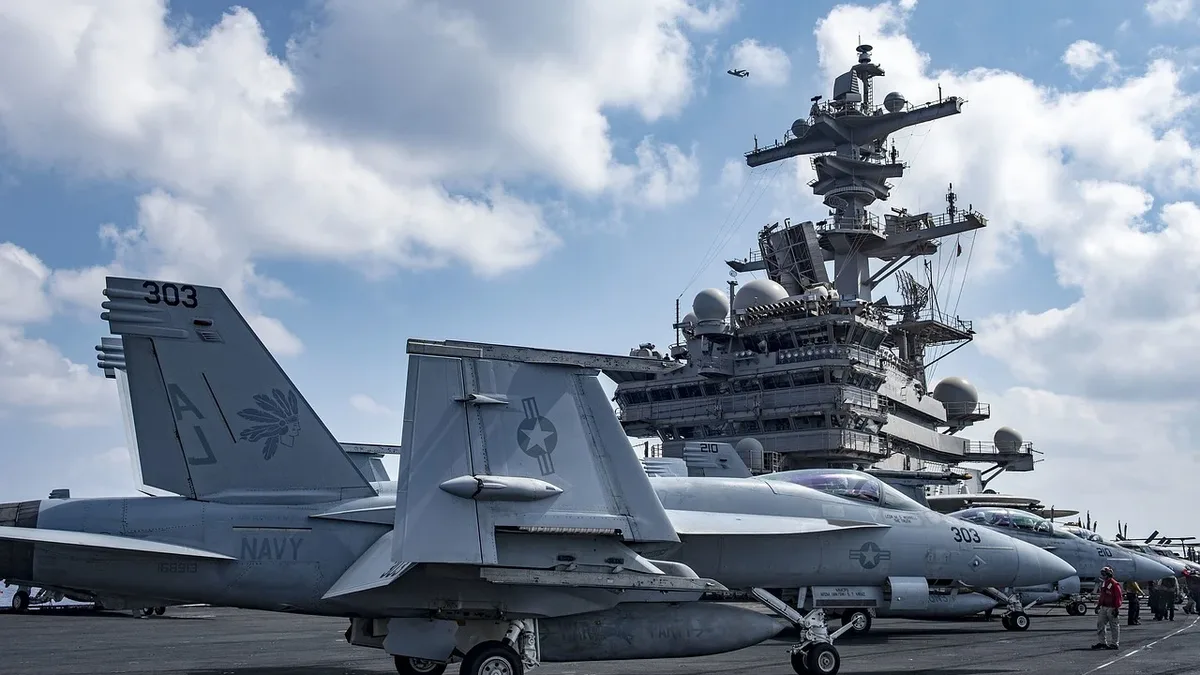
The US military deployment in the Middle East is escalating with three carrier strike groups and additional troops en route by the end of November 2026. The USS Theodore Roosevelt left its home port of San Diego on Sunday, October 3, bound for the region, where it will join the USS George Washington. If the George Washington remains upon the Roosevelt's arrival, it will mark the first time since April 2026 that the US has positioned three carrier strike groups near Iran. The USS George H.W. Bush is already in the Middle East, though it has temporarily departed the immediate area. By the end of November, three US aircraft carriers and two amphibious landing groups will be positioned near Iran.
Amphibious and ground forces reinforce region
Additional Marine Corps units and Army troops are deploying alongside the carrier groups, adding 9,000 to 10,000 personnel to the region. On Monday, the USS Makin Island amphibious readiness group set sail with an assault ship, aircraft, and 2,200 Marines. The USS Boxer amphibious readiness group is currently conducting operations near the Strait of Hormuz. These movements follow substantial reinforcements earlier in the year.
| Formation | Core Ship/Unit | Personnel Added |
|---|---|---|
| Tripoli Amphibious Ready Group | USS Tripoli & 31st MEU | Part of 4,500 total |
| Boxer Amphibious Ready Group | USS Boxer & 11th MEU | Part of 4,500 total |
| Army Contingent | 82nd Airborne Division's Immediate Response Force | About 2,000 soldiers |
In total, nearly 7,000 additional soldiers have already been deployed to the Middle East since the war on Iran began. The US has also sent two additional missile batteries over the past weeks to protect oil and gas facilities in Qatar and Saudi Arabia. Since early February, the US has deployed more than 120 aircraft to the region, including F-35 and F-22 jets, in the biggest surge in US airpower there since 2003. The US operates from a broad network of military sites across at least 19 locations, with eight permanent bases in countries including Bahrain, Qatar, and the UAE.
Diplomatic efforts stall amid military posturing
Despite ongoing indirect talks mediated by Qatar, negotiations remain deadlocked over Iran’s nuclear program and regional influence. Talks held on the sidelines of the UN General Assembly last month saw Iran propose a seven-day roadmap to reopen the Strait of Hormuz and resume nuclear talks in exchange for an end to the US naval blockade, sanctions relief, and a regional ceasefire. The plan was rejected by President Donald Trump. US Ambassador to the UN Mike Waltz said the plan’s demand for frozen funds and sanctions relief was non-negotiable. Iran’s Foreign Minister Abbas Araghchi told reporters that Tehran was fully prepared to resume the war. Late on Thursday, Trump warned Iran that the current confrontation will end very soon, threatening severe consequences if Tehran fails to reach a deal. Speaking in Texas, Trump said Iran will either do something very proper and smart, or they won’t be around very long. The US has sanctioned Iran’s rail and automotive conglomerates this week and unveiled sweeping new sanctions last month.
Operational strain and readiness concerns grow
Maintaining three carrier strike groups over an extended period risks worsening the Navy’s existing readiness challenges. Naval analyst Ronald O’Rourke commented on the pressure. "Maintaining a three-carrier presence in that area for an extended period would be a significantly greater strain," O’Rourke said. Before 2026 operations against Iran, the last time the US had three carrier strike groups in the Middle East was in 2003 during the early phase of the Iraq invasion. Defense Secretary Pete Hegseth said forces are ready to go should Trump order new attacks. The Pentagon is not currently planning to withdraw any assets even if an agreement with Iran is reached. US Central Command declined to discuss unit schedules for operational security reasons.
By the end of November, three US aircraft carriers and two amphibious landing groups will be positioned near Iran.