Yard Automation Adoption Stalls on Operations, Not Tech
Autonomous yard trucks are commercially ready, but widespread deployment is delayed by legacy yard layouts and inconsistent processes, not technology gaps
Autonomous yard truck technology is commercially viable today, but widespread deployment is stalling because operators have not restructured their yards to support it. This assessment comes from Douglas Taylor, general manager of the logistics division at Autonomous Solutions Incorporated (ASI), who spoke at a recent industry conference.
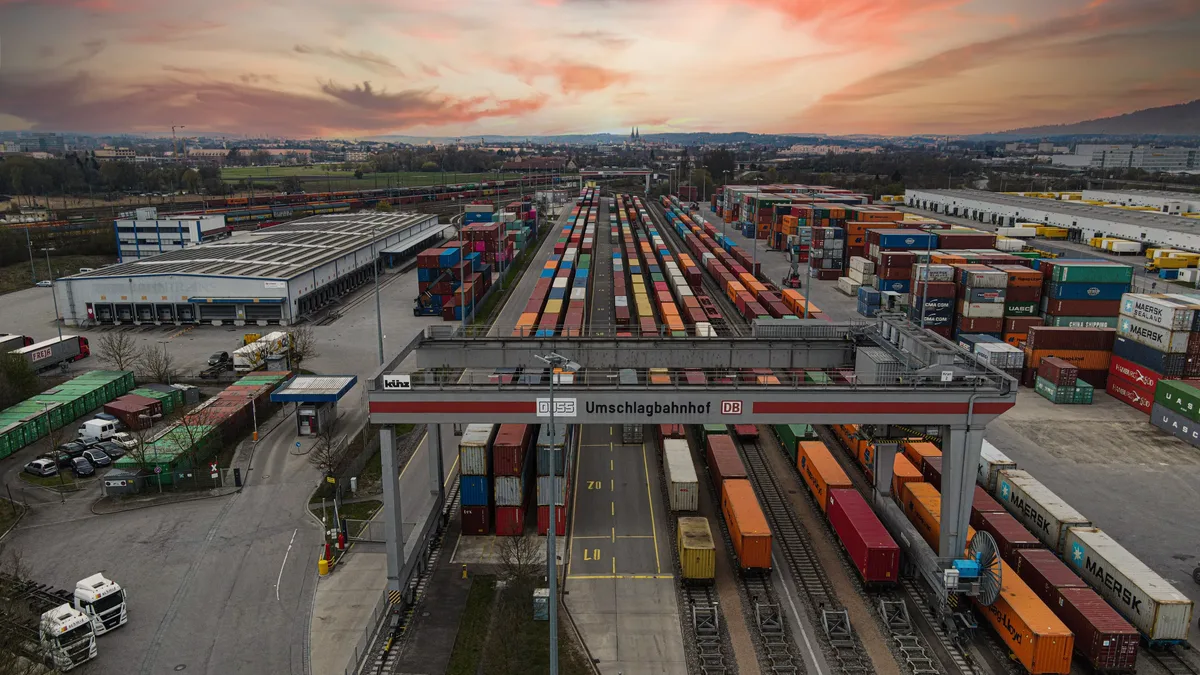
Taylor said the core obstacle is change management, not engineering. Yards were purpose-built for manual operation, with wide variation in yard management system adoption, inconsistent processes, and physical layout challenges. These include differences in gladhand connections and dock door types that complicate autonomous deployment. "It's not really a technology problem at this point," Taylor said. "It's more so maybe an adoption problem."
From Pilots to Commercial Deployment
To break through, ASI is moving away from narrow proof-of-concept trials. The company is launching several pilots designed to benchmark autonomous operations directly against manned operations across the full yard workflow. These pilots are expected to run 12 to 18 months.
After a successful pilot, the primary constraint shifts to truck availability and original equipment manufacturer lead times. Taylor stated these lead times are currently 6 to 10 months. This puts the realistic window from a final decision to live deployment at 6 to 12 months.
The Command and Control Platform
Central to ASI's offering is a command-and-control platform called Mobius, which integrates via API with a facility's existing yard management system. Mobius holds a geolocated map of the entire yard and orchestrates move commands received from the YMS, providing two-way status updates throughout each move. The system also continuously scans the yard to reconcile trailer locations and push corrections back to the YMS in real time.
The remote supervision capability enabled by Mobius is a key economic argument. Rather than stationing operators on-site at each yard, a single operator can oversee multiple trucks across multiple facilities from a centralized location. Taylor framed this workforce shift not as an elimination of yard driver jobs but as an elevation of them. Instead of a driver out, it's a driver up, he said, with workers moving into technical oversight roles.
Future Outlook and Competing Models
Looking further out, Taylor addressed speculation that fully autonomous over-the-road trucks could eventually eliminate the need for yard trucks by removing the drop-trailer model. One cost benchmark floated in the conversation compared an autonomous electric chassis unit at roughly $100,000 to a conventional cab-and-trailer combination at $240,000.
| Vehicle Type | Estimated Cost |
|---|---|
| Autonomous Electric Chassis Unit | $100,000 |
| Conventional Cab-and-Trailer Combination | $240,000 |
Taylor acknowledged the possibility but said the transition is likely at least two decades away. He argued that enclosed yard environments will remain a distinct, high-value automation use case well before over-the-road autonomy matures. ASI is also positioning its yard trucks for material delivery roles at large-scale data center construction sites, which Taylor described as a potentially massive new market.