Vaca Muerta Sand Demand Revives Argentine Rail and Port
Argentina's Vaca Muerta shale boom is generating millions of tonnes of sand freight, providing the cargo base to revive long-stalled railway and port
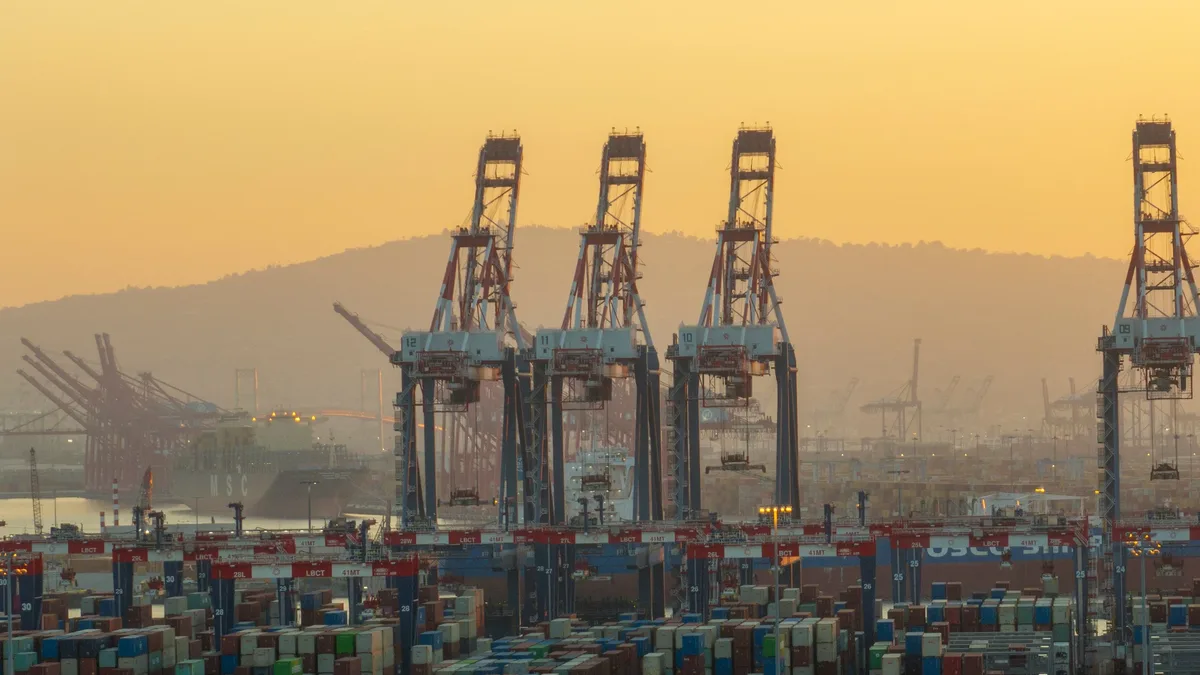
Argentina's Vaca Muerta shale play consumed roughly 5.5 million tonnes of silica sand in 2025. Demand for this proppant, hauled over 1,300 kilometers from the Paraná River basin, could hit 8 million tonnes in 2026-27, forcing a national reckoning with freight logistics.
According to a report by Fernando Torres of Trade Up Global Business Solutions, this massive sand volume is providing the economic justification for long-delayed multimodal infrastructure projects. The core challenge is moving bulk freight across a vast country with poorly integrated rail, port, and highway networks.
Railway Revivals Gain Momentum
One project seeking new life is the railway connection to the ports of Quequén and Necochea. Service on this line stopped in 2003. Four municipalities have now petitioned the federal government to include the Ayacucho-Tandil-Lobería-Balcarce-Quequén corridor in a new railway concession framework.
The potential is clear. Puerto Quequén handled over 9 million tonnes of cargo in 2025. It received 281,824 trucks but not a single railway wagon. The shale sand rush could give this dormant line a critical role in a broader freight network.
Port and Maritime Access Upgrades
The logic extends to maritime routes. Currently, vessels on Argentina's river system reach the Atlantic via the Punta Indio Channel, a one-way route with operational limits. A proposed Magdalena Channel would offer a more direct, bidirectional connection.
This could reduce reliance on the Montevideo area and cut delays linked to the Zona Alfa anchorage. The report states the economic impact is significant when port services, pilotage, and waiting times are factored in.
A more direct Atlantic outlet could also strengthen Argentina's access to long-haul markets in the Middle East and India. For some trade lanes, Atlantic routing around the Cape of Good Hope might offer an alternative to Red Sea passages affected by security risks.
Building a Multimodal Freight Platform
Several of these projects predate the shale boom. They lacked a large, predictable cargo base to support investment. Vaca Muerta may now provide that anchor cargo.
The proposed modernization of the railway between Bahía Blanca and Añelo is a key example. While initially serving shale, its strategic potential is wider. The corridor follows a historic route toward Zapala and could eventually extend to Pino Hachado, linking Argentina with Chile and the Pacific.
Completion would realize the Argentine section of the Southern Bioceanic Corridor. An integrated 5F railway model proposed by AIMAS points in the same direction: a longer multimodal corridor designed to diversify beyond sand into agriculture, mining, and container traffic.
Infrastructure built for a single commodity remains tied to its production cycle. Infrastructure designed as a shared freight platform can serve agriculture, mining, manufacturing, and international trade long after the original cargo changes.
Regulatory Support for Investment
Recent regulatory changes could support this transformation. Decree 748/2026 broadened the RIGI investment regime's definition of railway construction. It now includes renewing and developing existing infrastructure, plus associated logistics nodes, dry ports, and cargo transfer centers.
The decree does not guarantee any specific railway will be built. However, it potentially improves the framework for private investment in infrastructure whose value extends beyond a single project.
Rail, ports, coastal shipping, and trans-Andean connections should not be seen as competing solutions. They can become components of the same logistics system. The opportunity is to use Vaca Muerta's exceptional freight demand as the initial economic justification for infrastructure serving the wider economy.
The shale industry may have provided what was missing for decades. The question is whether Argentina can turn that cargo into a network. The more interesting question is not how much sand Argentina will move by 2028, but what these corridors carry afterward.