Panama Canal passage hits record $5.3m
Record Panama Canal auction fees and Amazon route surcharges show rising transit costs from drought and conflict, as port congestion reaches new highs.
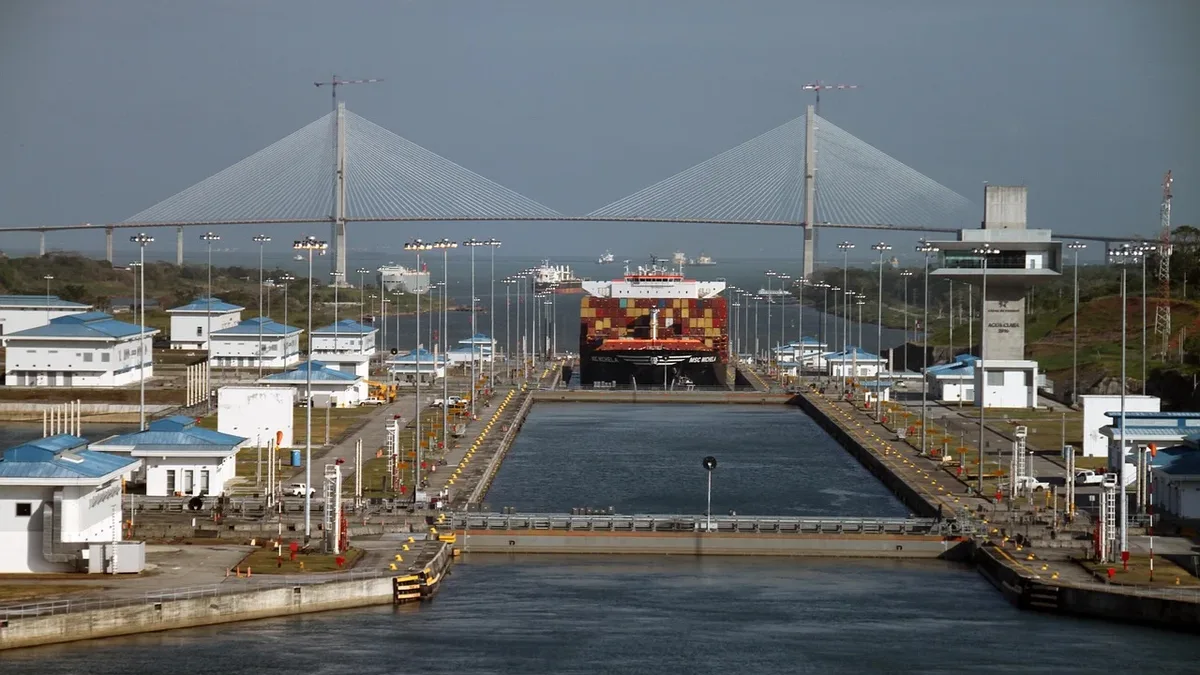
South Korea’s SK Gas paid a record $5.3 million at auction to secure a September 1 passage for an LPG carrier through the Panama Canal. The fee smashed a previous record of $4.6 million set earlier in the month, illustrating the escalating cost of key trade lanes.
War, drought, congestion, and regulation are turning simple voyages into complex calculations of risk and price. The industry is spending extravagant sums on passage, a service once taken for granted.
Canal Crises Squeeze Capacity
Panama’s worsening drought is forcing further transit restrictions from September. Vessels arriving without reservations have faced waits stretching toward 11 days. Further south, the Amazon drought is also impacting logistics. Container lines have introduced surcharges of as much as $1,900 per box to keep the port of Manaus connected.
The crisis at the Panama Canal is a stark example of capacity constraints driving up costs. Our latest stats on global port performance show how such bottlenecks cascade through networks.
Security Premiums and Port Shifts
At the Strait of Hormuz, passage carries a different premium. Iran’s decision to blacklist dozens of ships has created a compliance headache for owners. Nationality, ownership, cargo interests, and trading history can now determine whether a ship becomes a target.
The consequences of this disruption are visible in port rankings. Jebel Ali, the Middle East’s major container hub, crashed from 10th to 32nd globally. Throughput fell more than 90% year-on-year in the second quarter as Hormuz traffic collapsed. Across the first half, Dubai handled less than half the volumes recorded a year earlier.
A Tentative Return and Record Congestion
There are tentative signs of one old route coming back. More than 1,000 days after the seizure of the Galaxy Leader, analyst Lars Jensen suggested container shipping could approach normal Red Sea and Suez traffic levels by year-end. MSC has restored Suez routings on four east-west services, while Maersk and CMA CGM have steadily increased Bab el-Mandeb passages.
The extraordinary part is that the underlying security crisis persists. Liners are becoming more willing to price and manage the risk. They have another incentive: severe congestion elsewhere.
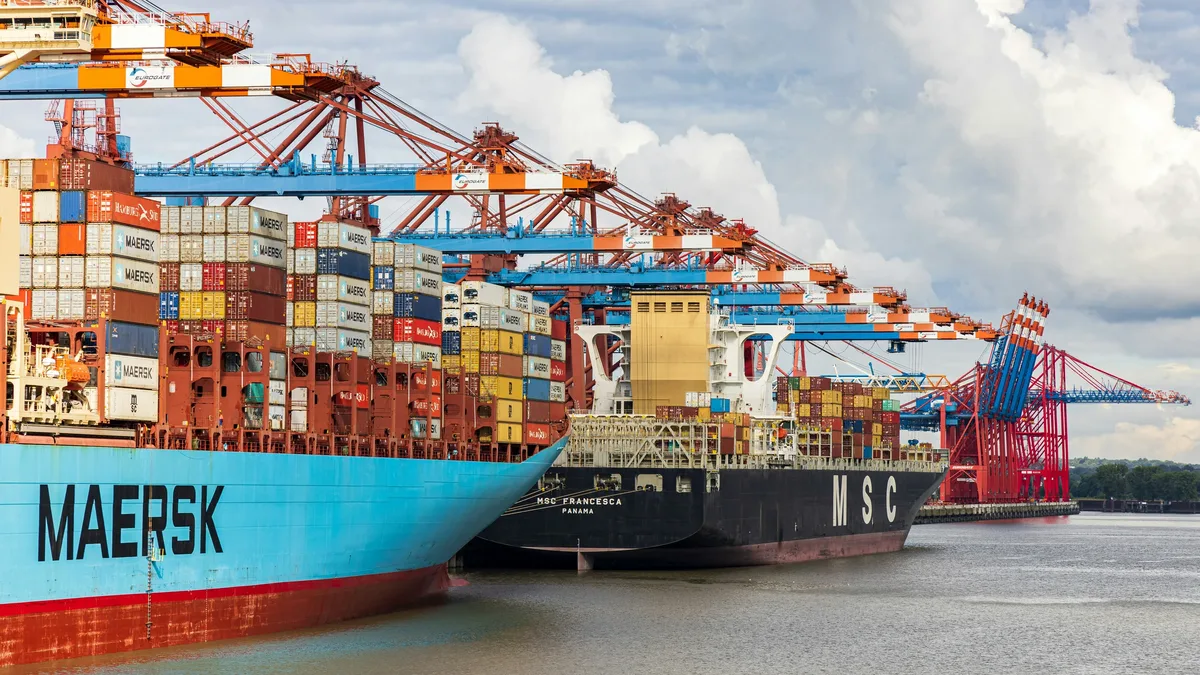
Global container port congestion hit an absolute record this week. More than 4.3 million TEU of containership capacity was waiting to berth, according to Linerlytica. Drewry argued the container system has spent years optimising for cost over resilience. At 90% berth utilisation, a terminal can take roughly a week to recover from a single day of disruption. This pressure is a key driver behind elevated fixtures and freight rates.
Shipping’s new currency is spare capacity. In conversation with Splash Ports, the World Bank’s Jan Hoffmann discussed how uncertainty, congestion, and concentrated liner networks are reshaping global trade.
Paratus founder Gus Majed argued Middle East risk has been permanently repriced. "War closed one artery and climate is squeezing two more," he said. The industry lost one of its towering figures this week with the death of German logistics billionaire Klaus-Michael Kühne.
Global ship waiting times have nearly doubled since 2019. Schedule reliability is deteriorating. Container volumes have outpaced capacity growth at many major ports, forming the basis for this week’s Splash Wrap podcast.