VesselBot reports 31% carrier emissions gap
A VesselBot analysis of Q2 2026 voyages reveals a 31.3% emissions-intensity gap between Hapag-Lloyd and MSC on the North Europe-North America East Coast
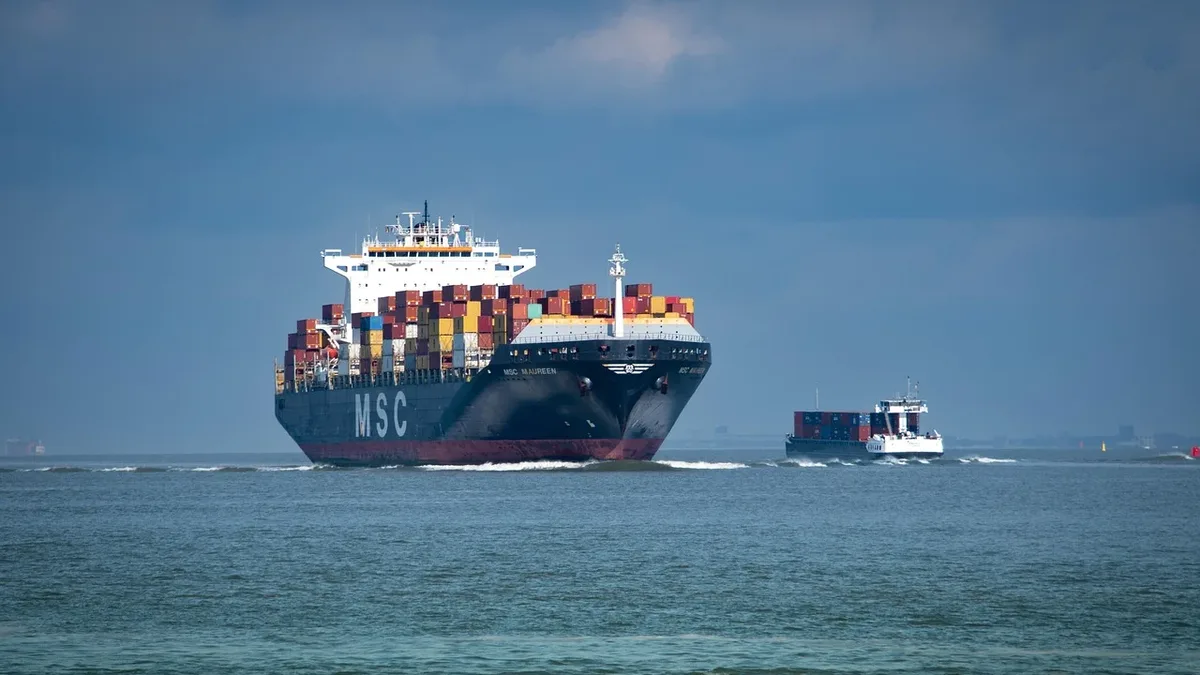
A VesselBot report has found a 31.3% gap in emissions intensity between Hapag-Lloyd and MSC voyages on the Northern Europe to North America East Coast trade lane. The analysis, covering 86,389 voyages by 6,523 container ships in Q2 2026, shows comparable services can yield vastly different environmental performance.
According to the source, global container shipping's average Well-to-Wake emissions intensity increased by 1.5% year-on-year to 231.7 grams of CO2 equivalent per TEU-kilometre. Five of the six vessel-size categories actually improved their efficiency.
Fleet-wide emissions intensity increases
Feeder vessels were the only category to become less efficient. Since feeders operated 63.9% of all voyages during the quarter, their performance was enough to raise the fleet-wide average. Very Large Container Ships (VLCS) achieved the strongest efficiency improvement at 10.6%.
The report highlights a disconnect between voyage share and transport work. Neo-Panamax and VLCS operated just 7.4% of voyages but generated 43.5% of total transport work. They accounted for 27.4% of emissions.
Feeder and Panamax vessels showed the opposite pattern. They operated 80% of voyages but generated only 26% of transport work. These two categories accounted for 45.6% of total emissions.
Major trade lanes record higher efficiency
Four major headhaul trades represented only 1.2% of voyages. These voyages generated 21.7% of total transport work while producing 12.3% of total emissions. The routes covered China and East Asia to Northern Europe, the Mediterranean and the North American West Coast, plus Northern Europe to the North American East Coast.
Hapag-Lloyd and MSC show different results
The average emissions intensity on the Northern Europe-North America East Coast trade was 138 gCO2e/TEU-km. Hapag-Lloyd recorded 80.7 gCO2e/TEU-km. MSC recorded 117.5 gCO2e/TEU-km, about 15% below the trade-lane average. Hapag-Lloyd's intensity was 31.3% lower than MSC's on comparable voyages.
VesselBot's CEO, Constantine Komodromos, said the gap demonstrates the influence of operations. "A trade lane average tells a shipper what a route looks like on paper. It does not tell them what happened on their shipment," he stated. "Distance alone cannot explain that spread. The difference is in how those voyages were executed."
Vessel utilisation drives efficiency
Vessel utilisation was a key factor. Voyages in the most efficient category recorded average utilisation of 80%. The least efficient category operated at 31% utilisation. The most efficient voyages also transported nearly 9,000 TEUs on average.
Komodromos warned that averages can be misleading. "A fleet-wide number moving 1.5% in the wrong direction suggests the industry lost ground this quarter," he said. "But five of the six vessel-size segments actually became more efficient."
The report used AIS data and digital twin models to measure Well-to-Wake emissions at the individual voyage level. For shippers tracking specific carrier performance, our stats page offers related operational benchmarks.